Archive | photography RSS feed for this section

Vernal Sun Eclipse 2015

20 Mar

IMG_0932_0908+ copy

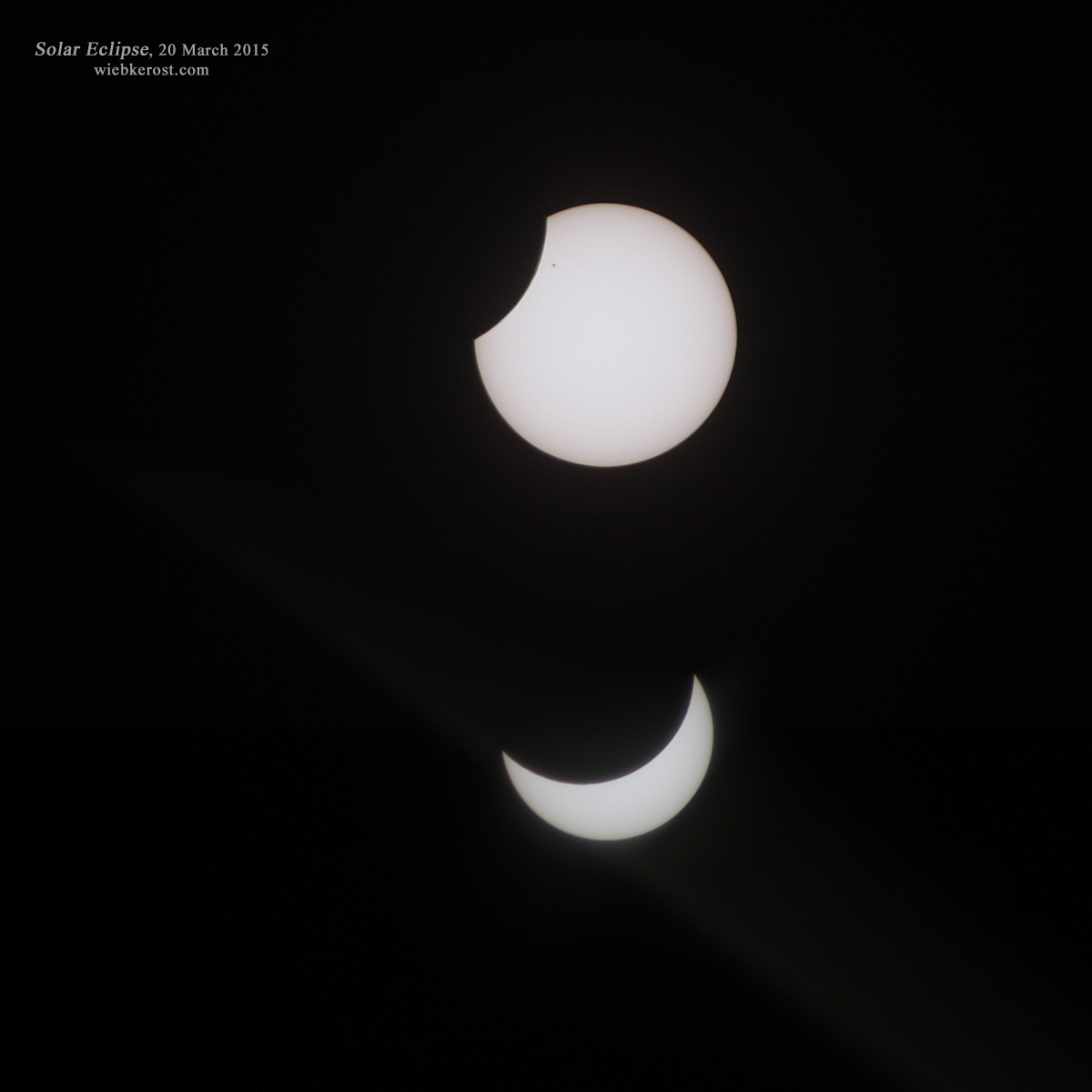
Solar eclipse 20 March 2015, coinciding with the vernal equinox and another black “super moon”

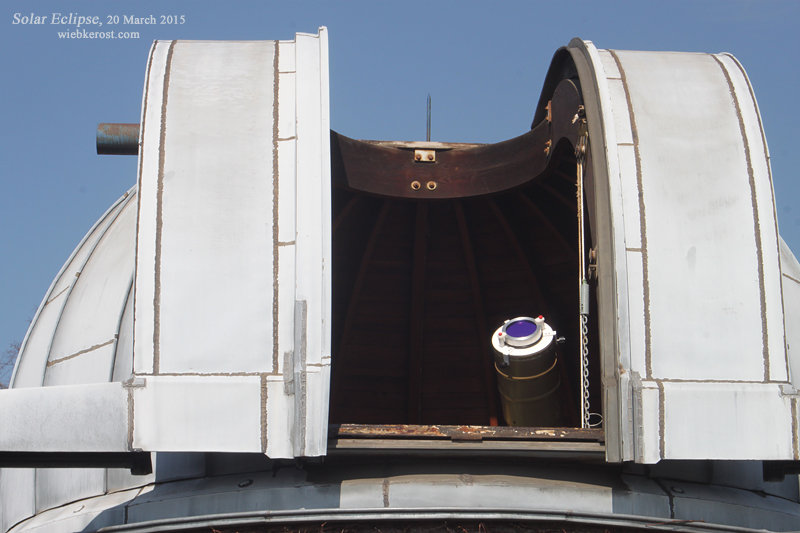
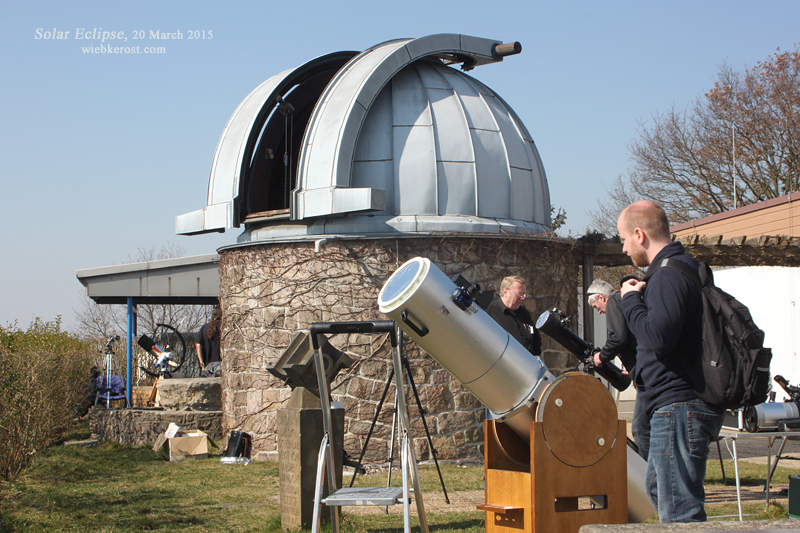
This time I photographed the event from the observatory Radebeul. Talking to other photographers and experienced hobby astronomers helped a great deal. Also there were a lot of different telescopes to try out. Some had filters that allowed for infrared frequencies to pass. The below photo is taken at the large Zeiss refractor. This way the sun activity could be observed closer…

IMG_0952+ copy2

Also note the little sun spot on above pictures…

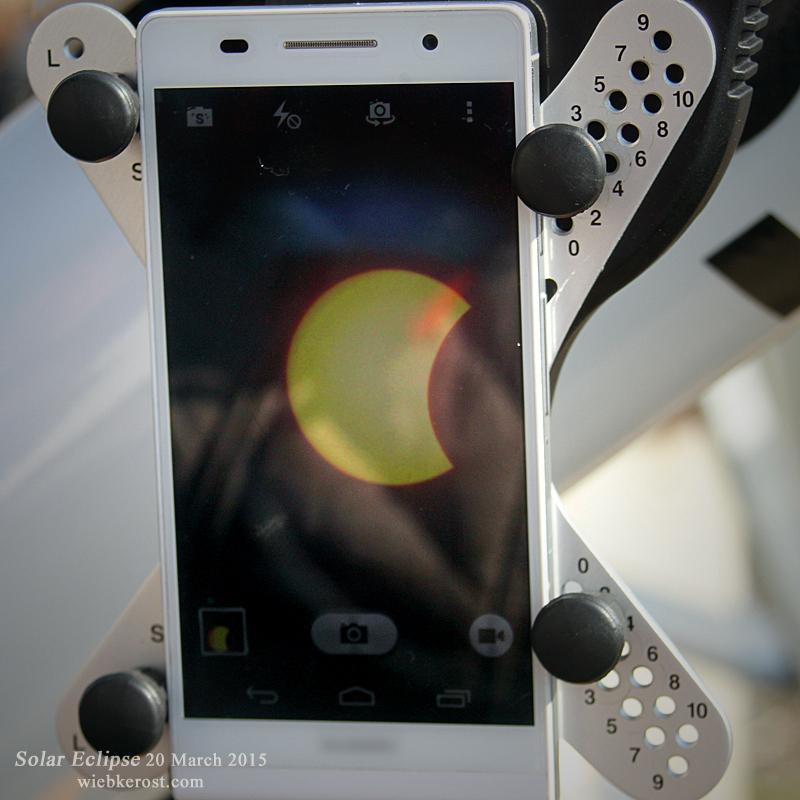
Another had installed an adapter for smart phones, so people could photograph the eclipse with their smart phones through the telescope…

IMG_0921 copy

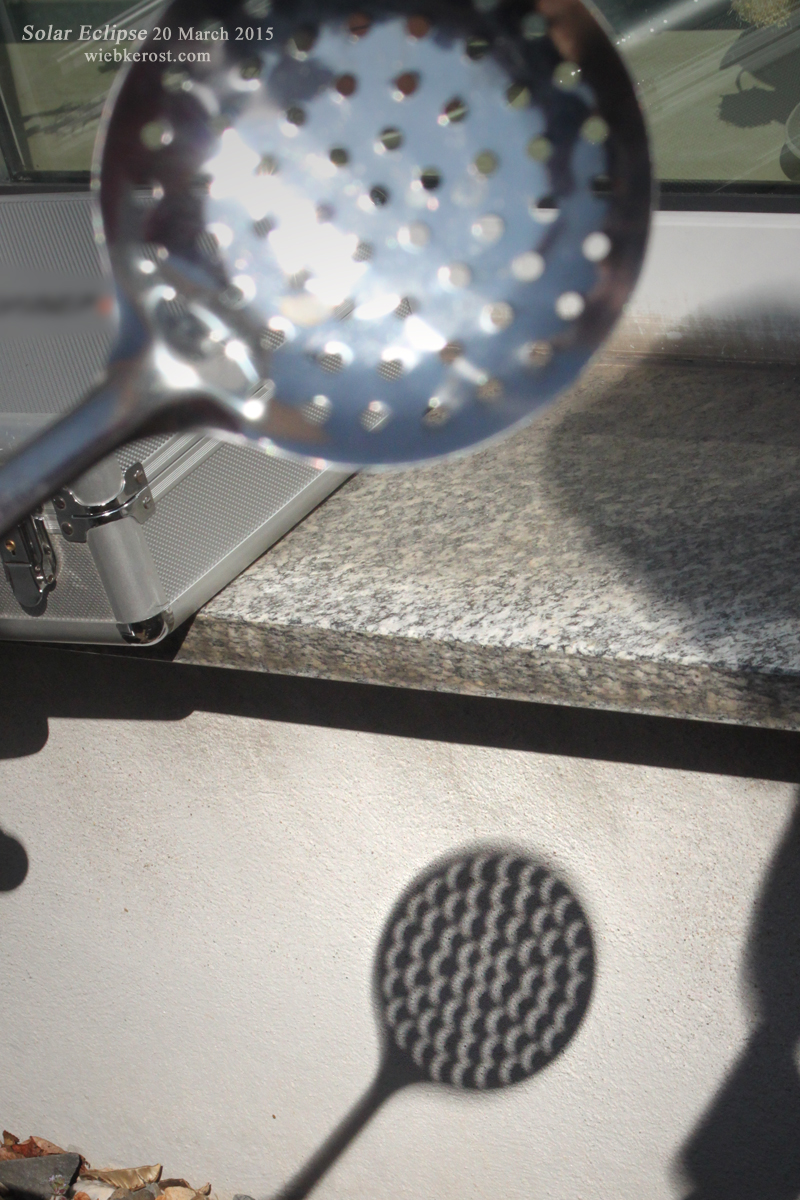
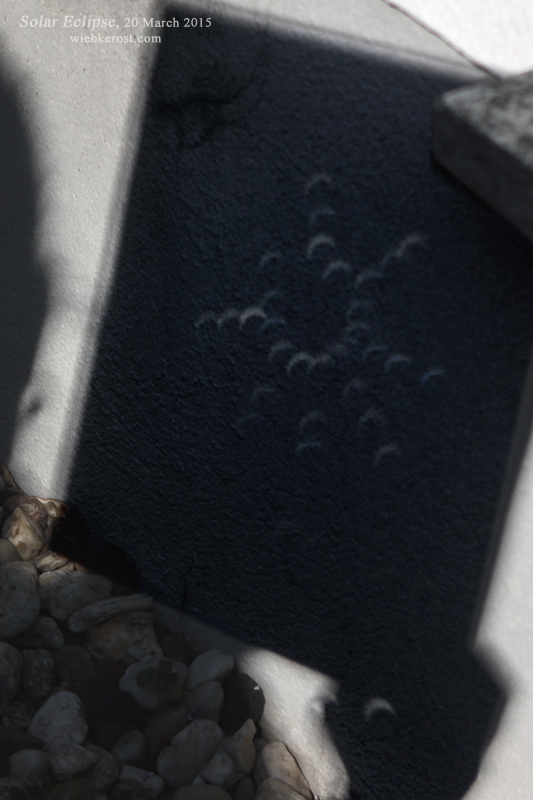
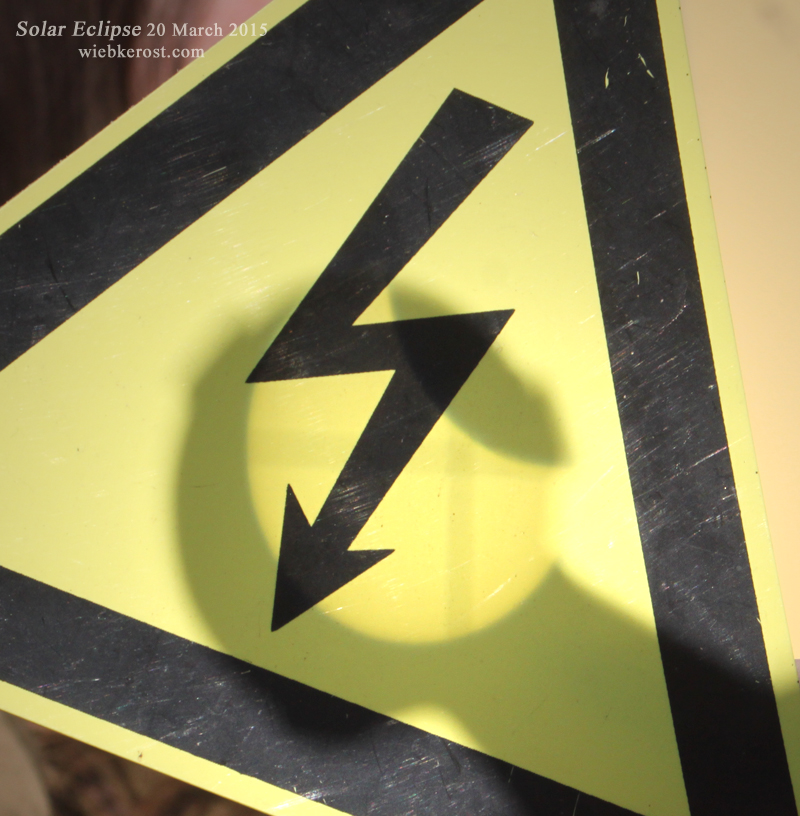
Simple and creative tricks for observing the eclipse without special glasses where shared as well…

IMG_0889 copy IMG_0899 copy IMG_0917 copy

1.) Through a skimmer 2.) through a perforrated carton, creating a nice pattern 3.) through the thumb and index finger forming an “o”

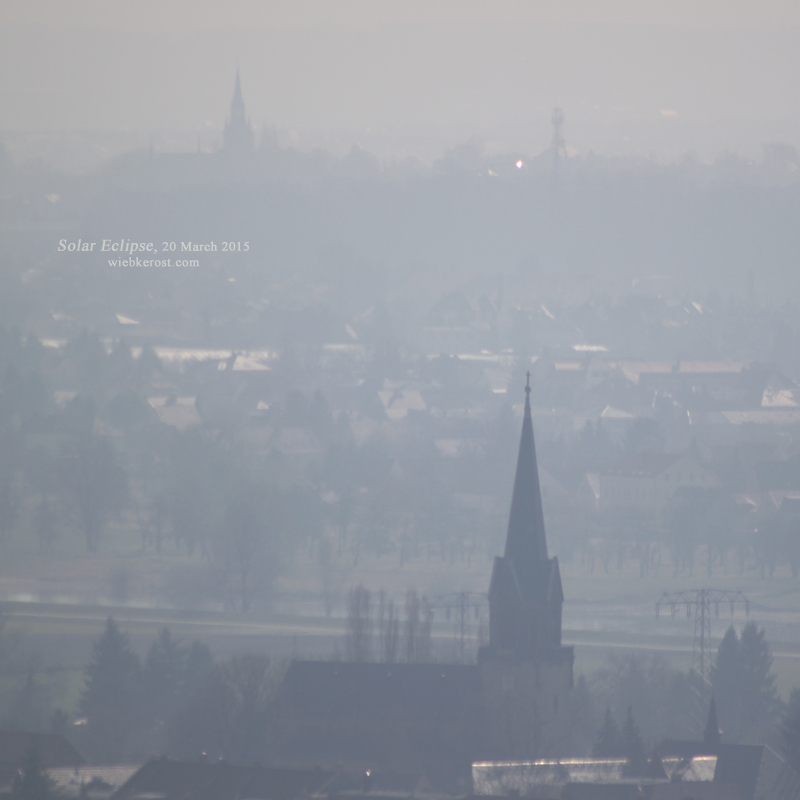
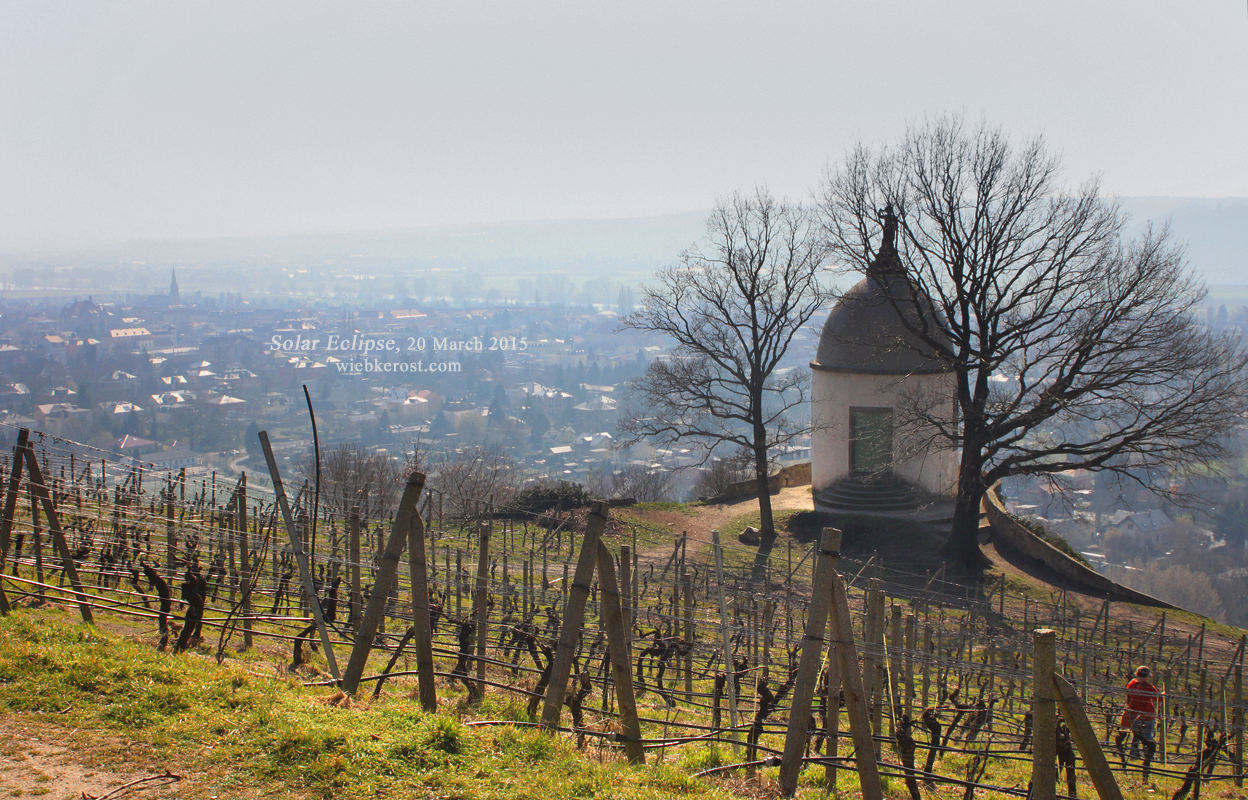
Now here are some more impressions. The the sky was clear, but the air above town was foggy. Also you may sense the gloomy atmosphere as the sunlight was dimmed during the eclipse…

IMG_0934 copy IMG_0924 copy

The below building houses the large Coudé Zeiss refractor…

IMG_0938 copyIMG_0944 copy

Post-eclipse, packing up

Auferstehungskirche

9 Jan

We spent this New Year’s in a small church in Dresden Plauen. It’s been my dream to see this church from the inside for years. I was told it had a beautiful art nouveau interior but little could I know… The history of this church dates back to the 12th century. There are still Gothic and Baroque elements to be found. E.g. the baptismal font and crucifix over the lectern date back to the 17th century. The main building is however a unique example of Art Nouveau architecture. It was built at the beginning of the 20th century under architects Lossow and Viehweger. The church, which was formerly known as Michaeliskirche, was then renamed and is since called Auferstehungskirche. Angel faces all around the quire remind of the church’s former name. Apart from the windows and church bells the building was not damaged during WWII. On the 1st of July 1945 the Dresdner Kreuzchor gave here their first concert after the war. During the 50ies the stucco of the entire choir was removed and the windows bricked up. In 1985 a new organ was installed behind the front of the old organ. After 1989 the windows around the choir were re-opened and the walls painted new. The altar room also received new windows, which were designed by artist Wolfgang Korn (Dresden). Lastly the tower and roof were restored. Today the church counts amongst the most beautiful churches of Dresden. The wooden art nouveau elements are indeed a special treat and remind of the wood carvings found in stave churches. I do in fact not know any other church that would show a similar, almost cinematic architecture, which came to life even more, when the organ started playing…

Tree Lights

1 Jan

Last photos for 2014, first post for 2015 –  I’m still sick but went for a short walk on New Year’s Eve and took the camera with me. I’ve always enjoyed experimenting with long exposure times and flashlight at night. Especially when not feeling well, this always had an uplifting effect on me.

See also: https://wiebkerost.com/2014/01/18/natures-church/

Thanks so much to my followers and supporters!

All the best for 2015!

Harvest Circles and other Compositions

30 Dec
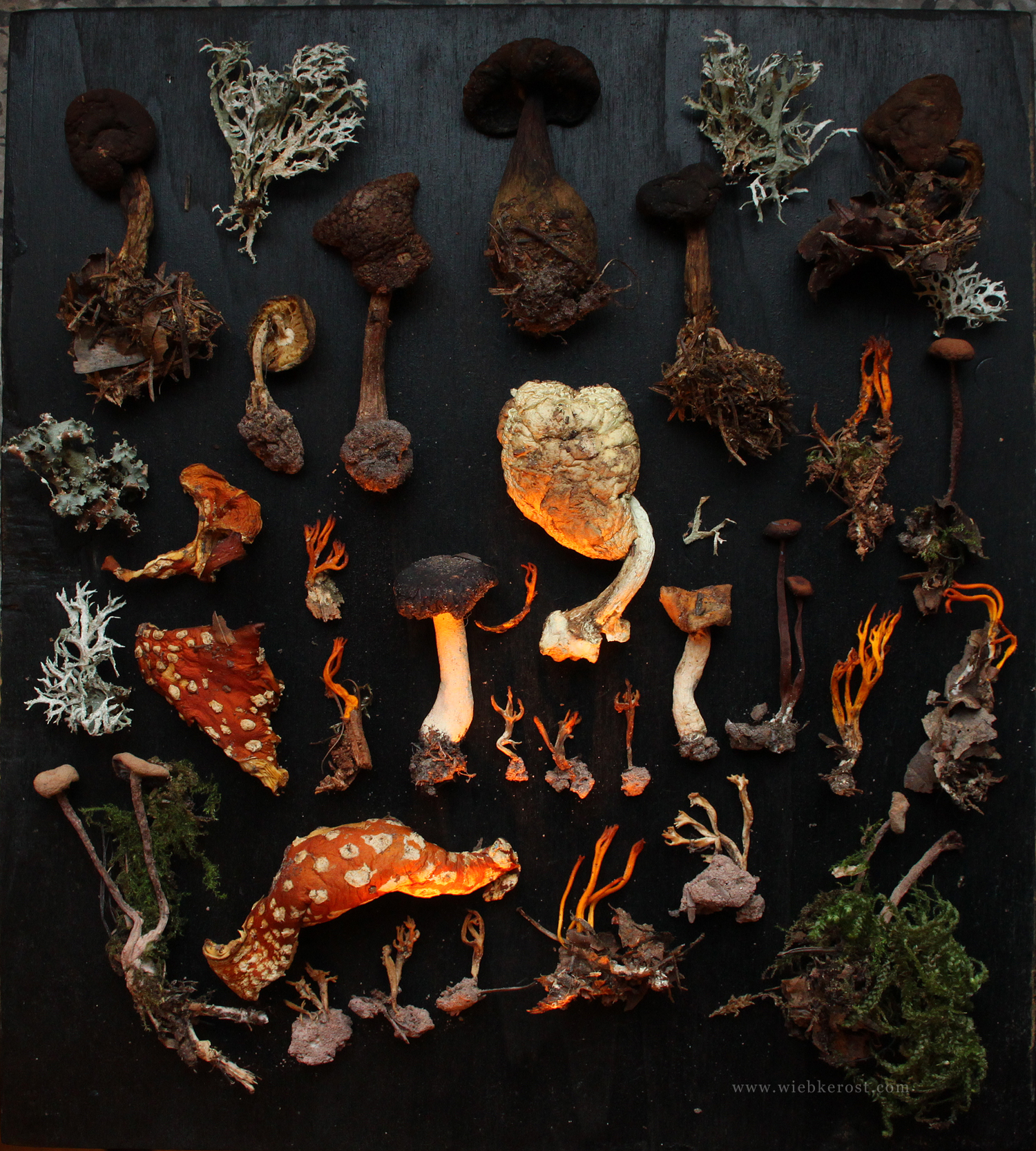
Fungi collection, 2013

Fungi collection, 2013

Find updated the site’s Art section, to which has been added amongst others a new page for “assemblage” works, which includes old and new pieces.

Assemblage is an artistic process. In the visual arts, it consists of making three-dimensional or two-dimensional artistic compositions by putting together found objects.

Usually this refers to fixed creations constructed from various elements, which may or may not be movable. I am expanding the term as I also group temporarily assembled objects into that category. You find there for example my “Harvest Circle” series and various other loose compositions, which are put together only for the moment of the photo and later re-used for other purposes. E.g. the dried herbs, fungi and flowers may be utilized by Occvlta jewellery in the creation of unique pendants and artefacts. Yet these temporary works have a point and meaning of their own and may talk to the viewer in different ways. Technically these could be considered still lifes, however I feel the elements are literally assembled, and the process and style of the compositions are closer to assemblage than classical still life.

Central to the work are the dried (and dead) parts of plants, from seed to root, from flower to fruit and everything in between. Usually the material is derived from plants I have grown and harvested by myself. Hence another working title for these compositions is “Dead & Arranged”. Below are some more examples.

In the future I consider doing fixed assemblages in the manner pictured, however I am still researching techniques and materials.

Gallery

Winter

27 Dec

Sunny December Morning

15 Dec

I was told this was going to be a beautiful day. It was so nice to be up early, enjoying a cup of coffee and seeing the flowers and shrubs in the front yard lit up and warmed by the sun.

Gallery

Fall

22 Nov

Christmas Rose

14 Nov

“Then he who is about to dig out the plant turns to the East and prays that it may be accounted lawful for him to do this and that the gods may grant him permission.” – Pliny the Elder

Folklore: East is where the sun rises and considered to be the place in heaven where the good spirits dwell. According to Christian tradition the dead are buried facing East, which is the direction from which Jesus is believed to arrive on the day of the resurrection in order to take them with him into the kingdom of heaven. But already before the Christian custom pagans would bury their dead so they would face the rising sun.
“One part hellebore with as much artemisia placed beneath a diamond gives animosity and audacity, guards the members [of the wearer] and makes victorious over what you wish.” – Hermes Trismegistus, 15 Fixed Stars 15 Herbs 15 Stones and 15 Figures

According to Hermes Trismegistus black hellebore is attributed to the fixed star Algol, together with the diamond. Agrippa connects the plant further to Mars and places it also under the rule of Saturn:

“Hellebore is dedicated to Mars and the Head of Algol.” – Agrippa

In ritual, hellebore may be burnt for consecrating Saturnian talismans and conjuring spirits of Mars. Christwurzel is also a key herb in Faustian rites of exorcism and coercion, along with garlic and sulfur:

“Carry with you Aaronis and also Hellebore, so that he [the demon] cannot delve into you or possess you.” – Dr. Faust, Magia Naturalis et Innaturalis

The name Christmas Rose comes from its auspicious time of flower or from the Christian legend that it sprouted from a young girl’s tears fallen on the snow, when she was sad that she had no present for the Christ child in Bethlehem. Another legend tells of the goddess Freya, who rescued an abandoned child during a deadly cold winter night by transforming it into a hellebore flower. Hellebore is also a symbol of innocence. It was considered holy and believed to ward off evil spirits, help heal the black death and safe pigs from swine flu if a helleborus flower was placed on the animal’s ears.

The name hellebore is composed of the Greek word ellein = to injure and bora = food, whilst the Latin adjective niger = black, may refer to the color of the plant’s root, which is almost black when dried. The German name Nieswurz refers to its use in sneezing powders. In medieval medicine it was a cure against demonic possession. The plant has a long tradition in healing madness and epilepsy (also called the ‘divine disease’ if a person was possessed by a demon): Ovid writes in his Metamorphoses of the three daughters of king of Argos, who had been driven mad by Dionysos and were screaming and running naked all across town, being cured by the healer Melampus of Pylos with a drink of hellebore solved in milk. Hence the herb was also known by the name Melampodium. Alexander the Great on the other hand is said to have died of an overdose of medication containing hellebore. During the Siege of Kirrha 585 BC, the Greek were said to have poisoned the city’s water supply with hellebore and waited until the enemy was too weak to be able to defend it any longer due to the diarrhea caused by the plant’s poison.

Pliny the Elder mentions the existence of an opposite to the Black Hellebore (Helleborus niger), with the ‘White Hellebore’ or ‘False Helleborin’ (the plant referred to is probably Veratrum album).

Meißen Windows

11 Nov

In October we also visited Meißen. I was especially happy to finally get to see the Dome from inside. Above is a selection of photos of from this short trip. For this post I chose windows as a main theme, inspired by a photo taken through the distorted window glass inside the castle and the details on a gothic window flanked with arrows..


Moritzburg

26 Oct

Last weekend we visited the newly restored castle in Moritzburg and afterwards had lunch at restaurant Seeblick. Below photos of the castle and lake in the golden October sun. On our way back we stopped once more to take a picture of the castle as sun was setting…

Seeblick / Lakeview

Moritzburg Castle

Favorite view towards the castle from the distance through the tree branches; castle reflection in the remaining water of the lake as it slowly empties before the winter; grey goose gathering; reed and chestnut trees by the water; people riding out by the lakeside

The statues on the balustrades all around the castle have been vividly restored. The originals were designed amongst others by Permoser and students. Depicted are puttos, animals and other figures as part of different hunting scenes…

I would have loved to also share pictures from inside the palace but unfortunately taking photos indoors was not allowed. Initially we had planned to take a special guided tour to get a chance to see the more remote parts of the building but sadly it was sold out. It was still amazing to see the newly restored Feather Room, the large collection of deer antlers and Meißen porcelain.