Archive | photography RSS feed for this section

Christmas Rose

14 Nov

“Then he who is about to dig out the plant turns to the East and prays that it may be accounted lawful for him to do this and that the gods may grant him permission.” – Pliny the Elder

Folklore: East is where the sun rises and considered to be the place in heaven where the good spirits dwell. According to Christian tradition the dead are buried facing East, which is the direction from which Jesus is believed to arrive on the day of the resurrection in order to take them with him into the kingdom of heaven. But already before the Christian custom pagans would bury their dead so they would face the rising sun.

“One part hellebore with as much artemisia placed beneath a diamond gives animosity and audacity, guards the members [of the wearer] and makes victorious over what you wish.” – Hermes Trismegistus, 15 Fixed Stars 15 Herbs 15 Stones and 15 Figures

According to Hermes Trismegistus black hellebore is attributed to the fixed star Algol, together with the diamond. Agrippa connects the plant further to Mars and places it also under the rule of Saturn:

“Hellebore is dedicated to Mars and the Head of Algol.” – Agrippa

In ritual, hellebore may be burnt for consecrating Saturnian talismans and conjuring spirits of Mars. Christwurzel is also a key herb in Faustian rites of exorcism and coercion, along with garlic and sulfur:

“Carry with you Aaronis and also Hellebore, so that he [the demon] cannot delve into you or possess you.” – Dr. Faust, Magia Naturalis et Innaturalis

The name Christmas Rose comes from its auspicious time of flower or from the Christian legend that it sprouted from a young girl’s tears fallen on the snow, when she was sad that she had no present for the Christ child in Bethlehem. Another legend tells of the goddess Freya, who rescued an abandoned child during a deadly cold winter night by transforming it into a hellebore flower. Hellebore is also a symbol of innocence. It was considered holy and believed to ward off evil spirits, help heal the black death and safe pigs from swine flu if a helleborus flower was placed on the animal’s ears.

The name hellebore is composed of the Greek word ellein = to injure and bora = food, whilst the Latin adjective niger = black, may refer to the color of the plant’s root, which is almost black when dried. The German name Nieswurz refers to its use in sneezing powders. In medieval medicine it was a cure against demonic possession. The plant has a long tradition in healing madness and epilepsy (also called the ‘divine disease’ if a person was possessed by a demon): Ovid writes in his Metamorphoses of the three daughters of king of Argos, who had been driven mad by Dionysos and were screaming and running naked all across town, being cured by the healer Melampus of Pylos with a drink of hellebore solved in milk. Hence the herb was also known by the name Melampodium. Alexander the Great on the other hand is said to have died of an overdose of medication containing hellebore. During the Siege of Kirrha 585 BC, the Greek were said to have poisoned the city’s water supply with hellebore and waited until the enemy was too weak to be able to defend it any longer due to the diarrhea caused by the plant’s poison.

Pliny the Elder mentions the existence of an opposite to the Black Hellebore (Helleborus niger), with the ‘White Hellebore’ or ‘False Helleborin’ (the plant referred to is probably Veratrum album).

Meißen Windows

11 Nov

In October we also visited Meißen. I was especially happy to finally get to see the Dome from inside. Above is a selection of photos of from this short trip. For this post I chose windows as a main theme, inspired by a photo taken through the distorted window glass inside the castle and the details on a gothic window flanked with arrows..


Moritzburg

26 Oct

Last weekend we visited the newly restored castle in Moritzburg and afterwards had lunch at restaurant Seeblick. Below photos of the castle and lake in the golden October sun. On our way back we stopped once more to take a picture of the castle as sun was setting…

Seeblick / Lakeview

Moritzburg Castle

Favorite view towards the castle from the distance through the tree branches; castle reflection in the remaining water of the lake as it slowly empties before the winter; grey goose gathering; reed and chestnut trees by the water; people riding out by the lakeside

The statues on the balustrades all around the castle have been vividly restored. The originals were designed amongst others by Permoser and students. Depicted are puttos, animals and other figures as part of different hunting scenes…

I would have loved to also share pictures from inside the palace but unfortunately taking photos indoors was not allowed. Initially we had planned to take a special guided tour to get a chance to see the more remote parts of the building but sadly it was sold out. It was still amazing to see the newly restored Feather Room, the large collection of deer antlers and Meißen porcelain.

Complementary

17 Sep

Belladonna placed between newspaper pages for drying

Beloved Green

3 Sep

Some impressions from our garden as summer is coming to an end… it was raining a lot as of late and temperatures have been dropping below 10°C at night. I am busy almost every day, collecting herbs, seeds and flowers for different purposes. My room is thus looking like an extension of our garden… full of herbs hung up or laid out for drying.

Gallery

Fire

29 Jun

MAGICAL ART/E circular tower event, London

20 Mar

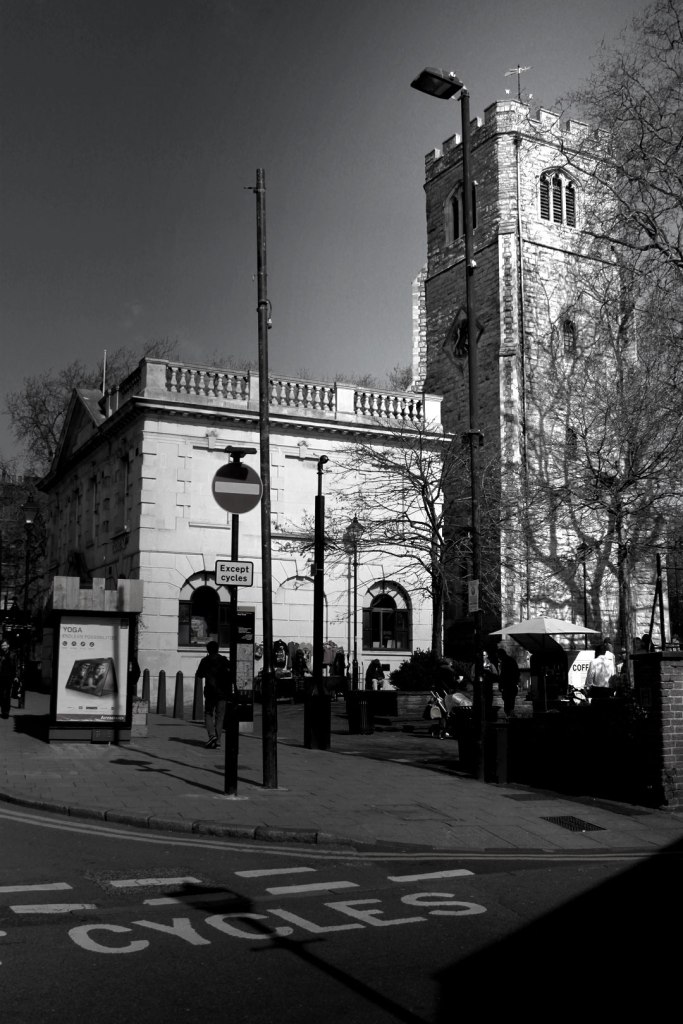
I will be attending and participating in the London MAGICAL ART/E, a circular tower of an event this weekend. The happening takes place at St. Augustine’s tower, Hackney, London, providing a unique location for performances and exhibitions. Coming with me are 20 photo prints from the Listen to the Silence series as well as prints of my drawings and abstract sigil art. Below is a photo of the tower.

Hellebores

14 Mar

sometimes these flowers are in my dreams

and the world is inside of a hellebore

my vision is that of a bug and these plants occur like giants

I observe the juices pulse inside of stems and leaves

I see every vein

I see flowers opening and unfolding

I love all their colors and shapes

just like the bees feed on them at a time

when other resources are yet scarce

sometimes in dream I hear them

move and unfurl

not so little froglings

so-called roses in the snow

stigmata the tips of serpent tongues

roots the dread head of Medusa

in my hand

eyes are

beneath are

diamonds

Listen to the Silence II

18 Jan

In a moment of clarity I snapped my camera and went down to the park, photographing the ivy and barren trees until the sun was setting, which was 233 images later and that was also when I ran out of battery. My fingers and feet had actually been freezing way earlier but that was secondary as my focus was on different things: the more you look the more you see and the more I was photographing the more I was discovering… It has not been like that for a while that I could be with the trees and vine and see them and listen to them. Respective there has been music on my mind all day, whereas the trees stood silently, but hearing is not always about hearing as much as seeing doesn’t always have to do with the eye… so what what did the senses sense or what did -I- sense? Usually it’s an overload. Nature’s silence can be very loud and powerful at times… That’s what is worked through and recapitulated later, when examining, picking out and enhancing the photos, finding forms and structures, whereby listening to the music that had been on my mind all day… Each photo in this post is representative of a row of similar photos, but for convenience I chose 20 of them to share here. And I leave them untitled this time around…

Closing tonight with this song by Oliver Huntemann: http://www.youtube.com/watch?v=6gYcunUMpeE

Before I was listening to old and new stuff by Hole. I could never get into this band, but since New Year’s Eve it caught my attention and now bought a record this evening.

On the Train

3 Jan

On the train to Stralsund

Stay hungry. It worked for Michelangelo, it worked for Picasso, and it works for a hundred thousand artists who do it not for love (although that may play a part) but in order to put food on the table. If you want to translate the world, you need to use your appetites. Does this surprise you? It shouldn’t. There’s nothing as human hunger. There’s no creation without talent, I give you that, but talent is cheap. Talent goes begging. Hunger is the piston of art. That little girl I was telling you about? She found hers and used it. – Stephen King, Duma Key

Reading on the train. Arriving at the hotel I suddenly feel sick and have to vomit. Can’t eat for 3 days. Slowly the hunger is back. Temperance comes after the death card. Happy New Year everyone.