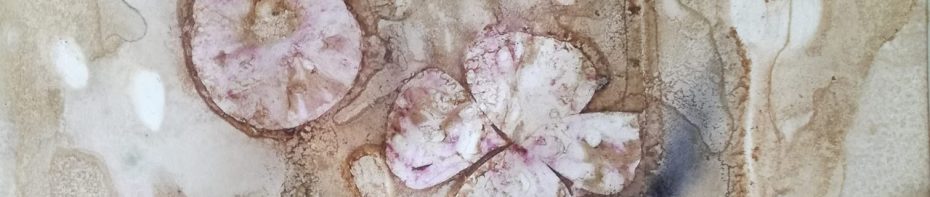


Almond Tears


I was told this was going to be a beautiful day. It was so nice to be up early, enjoying a cup of coffee and seeing the flowers and shrubs in the front yard lit up and warmed by the sun.
I was told this was going to be a beautiful day. It was so nice to be up early, enjoying a cup of coffee and seeing the flowers and shrubs in the front yard lit up and warmed by the sun.

“Then he who is about to dig out the plant turns to the East and prays that it may be accounted lawful for him to do this and that the gods may grant him permission.” – Pliny the Elder
Folklore: East is where the sun rises and considered to be the place in heaven where the good spirits dwell. According to Christian tradition the dead are buried facing East, which is the direction from which Jesus is believed to arrive on the day of the resurrection in order to take them with him into the kingdom of heaven. But already before the Christian custom pagans would bury their dead so they would face the rising sun.
“One part hellebore with as much artemisia placed beneath a diamond gives animosity and audacity, guards the members [of the wearer] and makes victorious over what you wish.” – Hermes Trismegistus, 15 Fixed Stars 15 Herbs 15 Stones and 15 Figures
According to Hermes Trismegistus black hellebore is attributed to the fixed star Algol, together with the diamond. Agrippa connects the plant further to Mars and places it also under the rule of Saturn:
“Hellebore is dedicated to Mars and the Head of Algol.” – Agrippa
In ritual, hellebore may be burnt for consecrating Saturnian talismans and conjuring spirits of Mars. Christwurzel is also a key herb in Faustian rites of exorcism and coercion, along with garlic and sulfur:
“Carry with you Aaronis and also Hellebore, so that he [the demon] cannot delve into you or possess you.” – Dr. Faust, Magia Naturalis et Innaturalis
The name Christmas Rose comes from its auspicious time of flower or from the Christian legend that it sprouted from a young girl’s tears fallen on the snow, when she was sad that she had no present for the Christ child in Bethlehem. Another legend tells of the goddess Freya, who rescued an abandoned child during a deadly cold winter night by transforming it into a hellebore flower. Hellebore is also a symbol of innocence. It was considered holy and believed to ward off evil spirits, help heal the black death and safe pigs from swine flu if a helleborus flower was placed on the animal’s ears.
The name hellebore is composed of the Greek word ellein = to injure and bora = food, whilst the Latin adjective niger = black, may refer to the color of the plant’s root, which is almost black when dried. The German name Nieswurz refers to its use in sneezing powders. In medieval medicine it was a cure against demonic possession. The plant has a long tradition in healing madness and epilepsy (also called the ‘divine disease’ if a person was possessed by a demon): Ovid writes in his Metamorphoses of the three daughters of king of Argos, who had been driven mad by Dionysos and were screaming and running naked all across town, being cured by the healer Melampus of Pylos with a drink of hellebore solved in milk. Hence the herb was also known by the name Melampodium. Alexander the Great on the other hand is said to have died of an overdose of medication containing hellebore. During the Siege of Kirrha 585 BC, the Greek were said to have poisoned the city’s water supply with hellebore and waited until the enemy was too weak to be able to defend it any longer due to the diarrhea caused by the plant’s poison.
Pliny the Elder mentions the existence of an opposite to the Black Hellebore (Helleborus niger), with the ‘White Hellebore’ or ‘False Helleborin’ (the plant referred to is probably Veratrum album).


Cloister, belonging to the Dome of Meißen; there hardly gets any sunlight into the yard, which is covered in ivy and fern. Strange figurines carved into sandstone watch from the side. It’s a beautiful mysterious place.


In October we also visited Meißen. I was especially happy to finally get to see the Dome from inside. Above is a selection of photos of from this short trip. For this post I chose windows as a main theme, inspired by a photo taken through the distorted window glass inside the castle and the details on a gothic window flanked with arrows..


All Hallows is amongst others a time to remember your Dead and be receptive for the messages they communicate from the other side. I have previously blogged about the season and thinning of the veil that usually separates the worlds of the living and the dead. This post is about the actual period known as Allhallowtide, or more famously Halloween, which is celebrated on October 31, and the following nights of All Saints and All Souls, which are commemorated successively on November 1 and 2. These celebrations have a Christian background, though Halloween is often also viewed to have originated from Pagan harvest festivities, particularly the Gaelic Samhain. All have in common an occupation with death and the souls of the dead. Hence skulls and ghoulish appearances are a prominent theme during Halloween. Halloween could be translated as the ‘eve of the hallowed ones’ – the holy or good dead, spirits and saints of Christian faith. However, these long nights are also seen as a time of mischief and in pagan tradition they mark the beginning of the Wild Hunt, a fearsome and dangerous time associated with fateful events.
During these nights it is common to light candles and serve offerings for the dead. These customs find a climax in the Mexican celebrations of the Dia de los muertos, Day of the Dead, when the cemeteries turn into oceans of light, offerings of sugar skulls and pan de muerto, bread of the dead, are placed on graves and home altars, people dress up as skeletons and identify consciously with their dead and the skeletal saints Santa Muerte and la Calavera Catrina. (These customs may be rooted in but are actually far removed from Aztec times, when gruesome deities such as Mictlantecuhtli and Mictecacihuatl were feared and appeased with bloody sacrifices). Today’s day of the dead customs are mostly influenced by Catholicism and similar practices exist in other parts of Latin America and catholic parts of Europe.
I have been impressed and moved by the intensity and beauty of these celebrations since the first time I learned about them, and feel an urge to create a similar atmosphere in my place of living. Actually we too have a time for commemorating the dead, which is Totensonntag, the last Sunday before Advent. This is when we visit the graves of our dead relatives, grandparents and great-grand parents. But in my practice I also relate to the Dead that I once shared a part of my life with and the so-called Mighty Dead, which are much older spirits that act as spiritual guides and idols. For me these three nights of Allhallowtide are a time to relate to and honor these Dead and to do so I adopted some of the practices from the Mexican festival, some of which have been taught to me by friends and so another aspect of following these customs is carrying on a tradition.
Below you can see the offerings placed outside on my window bench. They consist of grave candles (which are weatherproof and indispensable during the stormy autumn nights), normal candles (which may or may not burn, depending on the weather), bread of the dead shaped into preferred forms and sweetened with honey, pomegranate (a reference to underworld deities such as Hecate and Persephone), orange or other type of fruits, e.g. figs, Vervain strewing herb and a glass filled with fresh water. Later I also added a pumpkin-lantern, into which I carved a Teufelskunst devil, to strengthen the flame that keeps me and my artistic work alive:

These offerings are left for as long as the candles keep burning (e.g. 72 hours) and then brought to a graveyard or a remote place in the forest, ideally where they won’t be removed by third parties, just so the souls can ‘feed’ on them undisturbed. And again in this case these offerings are not related to ones normal dead relatives and hence are not placed on those graves, but rather a neutral yet powerful spot is chosen, such as a crossroad, in front of a large tree or cross. Additional candles are lit, incense burnt and through silent or spoken prayers the tie between oneself and the spirits is renewed and strengthened.
Now I hope this post is helpful to my readers and especially those, to whom this festival (and my obsession with it) occurs as strange. Respect the work and you may prosper from it as well.
Update: I am adding some useful links on the topic below. The list shall grow as I find time and inspiration to add more…
Dreamt I was on some weird punk concert, with a band in their late fourties or fifties, and we were inside a school building with teachers and students, but the band was playing damn raw, aggressive and somewhat dark punk music, to which we were jumping around and poking each other… then suddenly I found myself in a different place, everything was dark and warm around me and infront of me was floating a huge brain in its sleeping stage. The brain was just mega-big and floating in space. There were spotlights highlighting it, whilst it kept turning around its own axis. First it looked all even and smooth with no gyri, and a literal ‘veil of sleep’ was covering it. But then the veil was lifted and the surface changed so that suddenly one could see the pulsating arteries, the veins and gyri. The light was like in a museum’s display cabinet, but the brain itself appeared as tall as a whale and the space around it reminded me of the deep ocean. I was entirely fascinated watching this thing from all sides but then I was woken from sleep and had to get up.
{I keep receiving positive feedback on my written dream accounts so I keep sharing them for anyone who likes to read them.}
NB: The brain condition known as “smooth brain” (lissencephaly) exists for real:

Adult human brain with no folds. Image Credit: Adam Voorhes. http://www.voorhes.com/
Last weekend we visited the newly restored castle in Moritzburg and afterwards had lunch at restaurant Seeblick. Below photos of the castle and lake in the golden October sun. On our way back we stopped once more to take a picture of the castle as sun was setting…


Favorite view towards the castle from the distance through the tree branches; castle reflection in the remaining water of the lake as it slowly empties before the winter; grey goose gathering; reed and chestnut trees by the water; people riding out by the lakeside


The statues on the balustrades all around the castle have been vividly restored. The originals were designed amongst others by Permoser and students. Depicted are puttos, animals and other figures as part of different hunting scenes…


I would have loved to also share pictures from inside the palace but unfortunately taking photos indoors was not allowed. Initially we had planned to take a special guided tour to get a chance to see the more remote parts of the building but sadly it was sold out. It was still amazing to see the newly restored Feather Room, the large collection of deer antlers and Meißen porcelain.


 Wiebke Rost