I used to sell on Etsy, but stopped, when they began to force sellers to provide their personal bank info (which I did not want to give to them). I also felt they were starting to charge more and more fees. I too experienced automatic renewals even though I had turned them off. But all of this was small compared to the experiences shared here. I am hence sharing this.
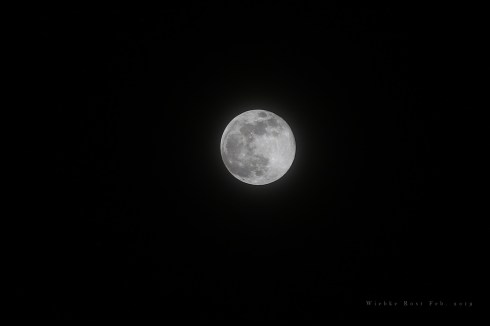


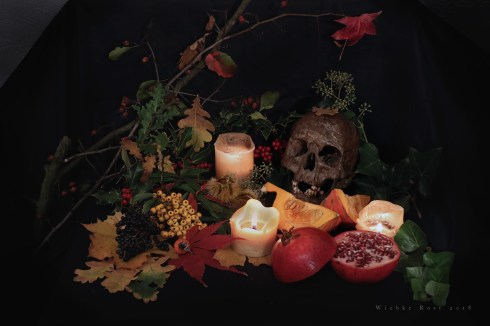
Fall 2018
5 NovFall is here, death is here, but the flowers keep on flowering
-

- Calendula, blooming into late autumn
-
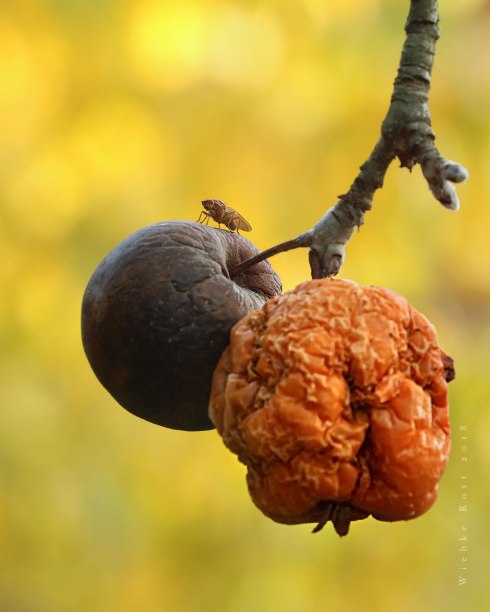
- Apple tree, late autumn
-
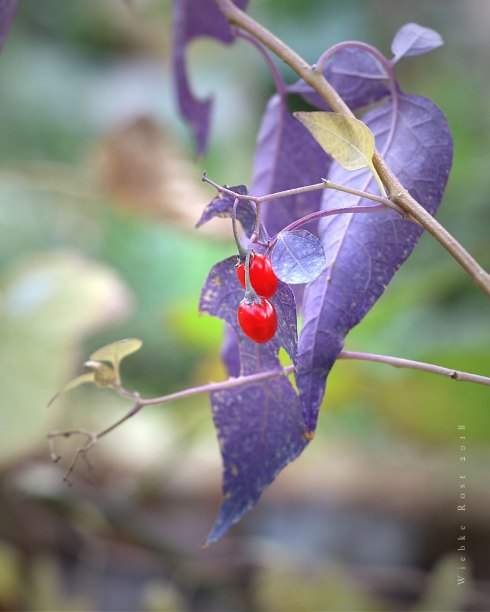
- Bittersweet
-

- Lily of the Valley
-
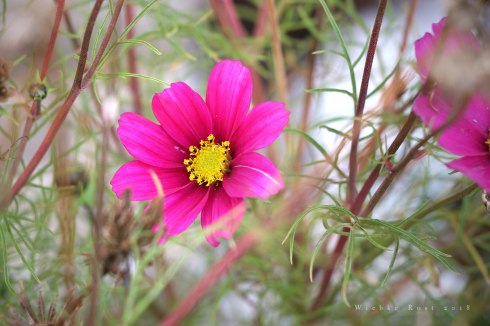
- Schmuckkörbchen
Samhain Celebration III
2 NovAn Evening of Dark Art and Music (originally posted on teufelskunst.com)
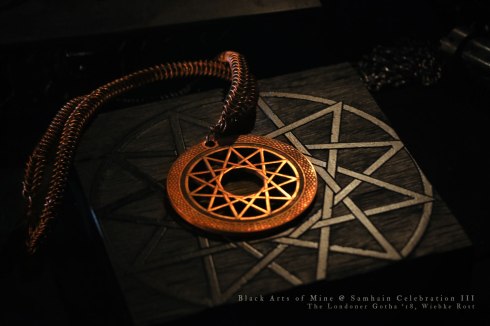
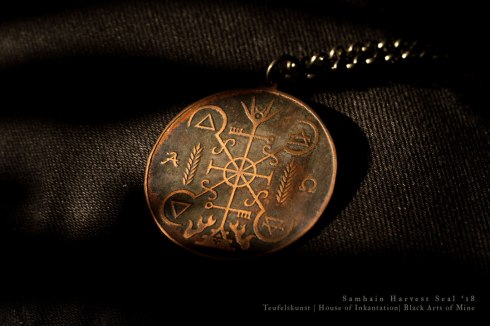
The third Samhain Celebration combined again some of the best black metal as well as exclusive hand-made art. Ybenhain offered resin jewelry and items made of forest finds. You can check out the creations at the Ybenhain Instagram. In contrast, Black Arts of Mine creates all things from metal and bone. He contributed etched copper pendants and pins with the Samhain Harvest Seal for the event. Noteworthy, the precision work on a copper hendecagram (see below). Weird, the metal chest with a fly engraving, housing a steel cased vial filled with a dozen dead flies. For more please visit the Black Arts of Mine Instagram. I myself contributed new art editions as well as an ever growing assortment of incense blends.
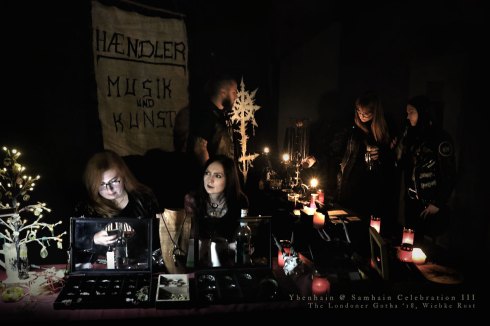
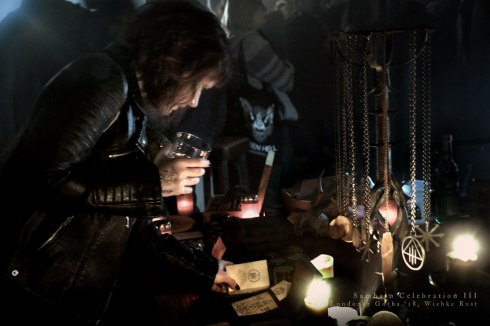
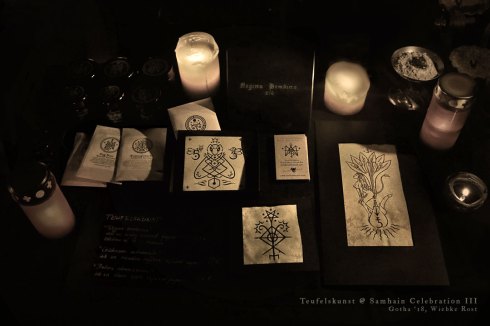
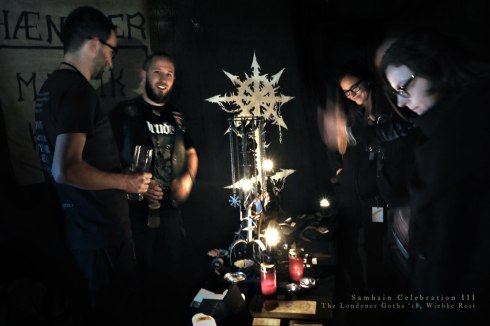
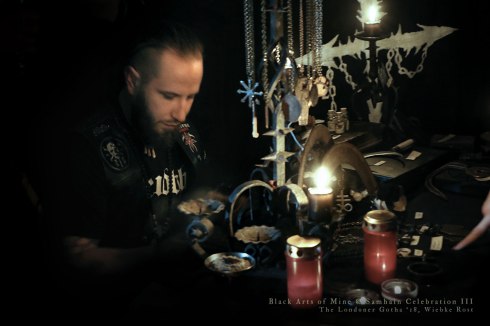
A reason for people to travel as far as from the States were the bands. I was able to take a few snapshots of Turia, and the Mosaic feat. Schwadorf set as well as Fyrnask.
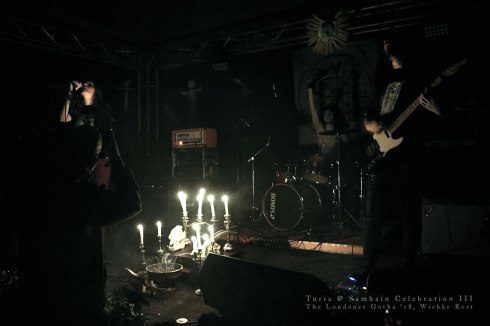

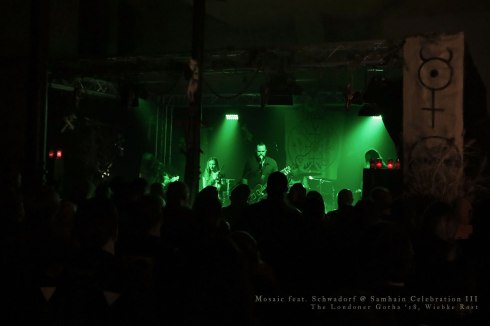
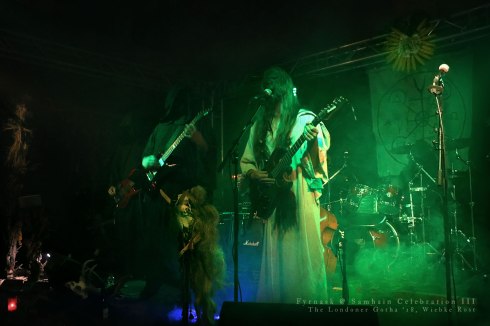
Signature feature and fundament for the evening’s special atmosphere, always appreciated by the audience, is the unique stage, annually adorned with reeds, ivy, chestnut garlands, corn dolls, carved skulls and this year’s corn sun. Connecting it all since three years is the Seal of the Harvest in the back, which I once designed for the event.
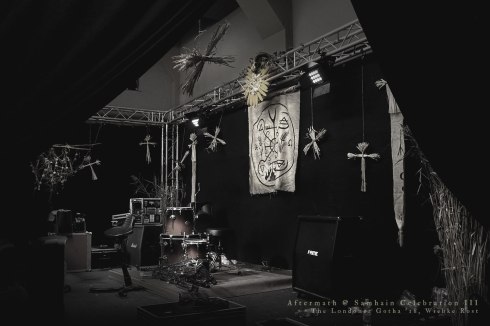
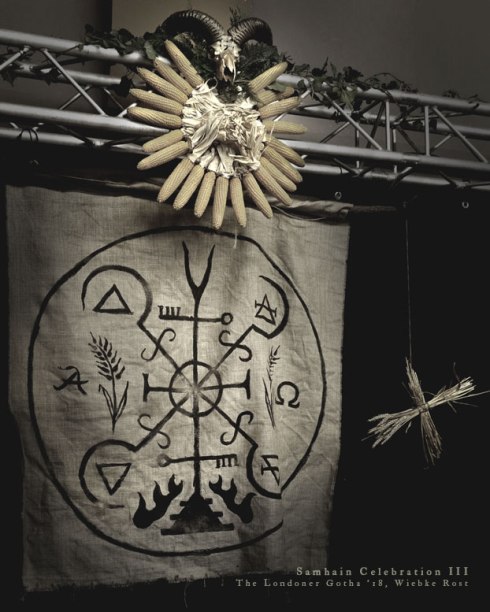
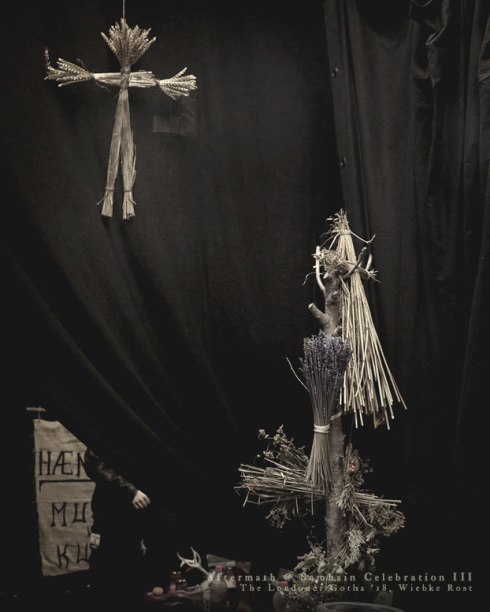
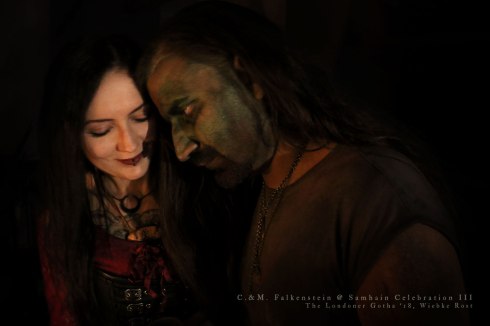
The Samhain Celebration in Gotha is one of those rare occasions where I can show presence with my art and meet like-minded people. It is a unique combination of art, tradition, music and spirit, which both is highly satisfying for the performers as well as the audience. Making it all possible are the people of The House of Inkantation, Eisenwald and a handful of helpers.
Samhain, Halloween, Day of the Dead
1 Nov “End of Summer”
Samhain means “end of summer”. The Gaelic festival marked the end of the harvest season and the beginning of winter. Today it is celebrated on the night between October 31st – November 1st. It is also associated with St. Martin’s day, November 11th. Some also connect it with the midpoint between the autumn equinox and the winter solstice (or the nearest full moon), when the ecliptic longitude of the Sun reaches 225 degrees.
Samain is also the name of the Celtic god of death, who from this point on ruled over the land, while the goddess of vegetation was forced to decent into darkness until the coming spring. Her parting is accompanied by the honk of the geese leaving for the South. Any herb harvested after this point would be considered harmful, save for the grey mugwort. During Samhain the doors to the spirit-/ underworld opened, and the spirits that would enter, were not always friendly. In some tales, spirits of darkness and chaos (such as the Irish Fomorians and the Crom Cruach) would be given human sacrifices.
Rural people’s survival depended on the harvest. The fear of loosing the harvest, fierce autumn storms, the long nights etc. was real. It was essential to secure the harvest and protect the home, barn and family. It was custom to cleanse and protect the home by burning herbs. Processions and rituals were performed to ward off revenants – or Wiedergänger – the returning spirits of the restless dead.
From the need to protect oneself may also have sprung the latter-day custom of placing candles in hollowed out objects. Turnips or pumpkins were turned into grimacing lanterns. Similar to the scarecrow, the lantern was to ward off ‘evil’ and at the same time its flame lit up the night. This “light in the dark” is embodied by amber, a shiny yellow fossilized tree resin. Amber is called Bernstein in German, from Low German börnen, meaning “to burn”. The Greeks knew it as ḗlektron, from ēléktōr, meaning “shining sun”.
Samhain also marks the time when deciduous trees have shed most of their leaves. The leaves fall to the ground, decay and nurture the cycle of life. Burning their wood keeps men warm, their bark heals. Evergreen conifers deliver in addition aromatic resins with cleansing and healing properties.
“Day of the Dead”
The pagan festivities surrounding Samhain have been substituted by Christian feast days throughout a large part of the Western world. Folkloric customs continue to merge with modern consumerism. From the pagan Samhain to the Christian All Saints day, the modern world celebrates “Halloween” with plastic skulls, led pumpkins and dressing up as corpses. Everyone can be a zombie for one day or night. Halloween gives a good example for cultural appropriation gone wild. It is part of human nature, both to adopt other traditions as well as to defend one’s own culture and rituals.
One tradition that has been sinking into Western culture and heavily influences our aesthetics, is the Mexican Dia de los Muertos. As the festival in Mexico becomes bigger and is celebrated in impressive ways every year, so grows the fascination with it outside of Mexico, similar to how the cult of Santissima Muerte is growing in numbers both in and outside Mexico. The worship of death and the dead is prospering and it is nothing extraordinary.
All over the world people venerate their ancestors and saints, with altars at home, at their graves or in temples or chapels dedicated to them. Often there are special festivals dedicated to the veneration of the dead. In some countries these celebrations fall in the months of July and August, such as the Japanese Obon or the Argentinian feast for San la Muerte. In other countries they center around the days and nights spanning from All Hallow’s Eve (October 31st) to All Saints (November 1st) and All Souls Day (November 2nd).
In Germany it is custom to visit and adorn the graves of family members on the Totensonntag (the “Sunday of the Dead”). It falls on the last Sunday before the first Advent (usually at end of November) and, though of Protestant origin, is a protected holiday in all of Germany. The day is meant to be spent in silence and it is forbidden to dance or play loud music in public.
In Mexico the celebration starts on All Hallow’s Eve, when children make altars for the angelitos (the souls of dead children). November 1st is referred to as Día de los Inocentes (“Day of the Innocents”) or Día de los Angelitos (“Day of the Little Angels”), which is when the souls of dead children are honored. On November 2nd, the actual Dia de los Muertos, the graves of dead family members are visited. The graves are adorned with cempasuchil flowers, the flowers of the dead. Between the orange sea of flowers, candles are lit and Muertos (the bread of the dead) and sugar skulls are placed as offerings, along with favorite food, beverages, photos etc. The dead are greeted and welcomed back to the world of the living for one day and night. Dancing and intoxication are welcome and encouraged.
Finally within some antinomian and Gnostic traditions Lucifer or the “Bringer of Light” is worshiped and called upon during this night, e.g. by using the formula:
Lucifer, Ouyar, Chameron, Aliseon, Mandousin, Premy, Oriet, Naydrus, Esmony, Eparinesont, Estiot, Dumosson, Danochar, Casmiel, Hayras, Fabelleronthu, Sodirno, Peatham, come, Lucifer. Amen.
Regina Bombina, Golden Bee Pendant, The Sacred Bee
14 Oct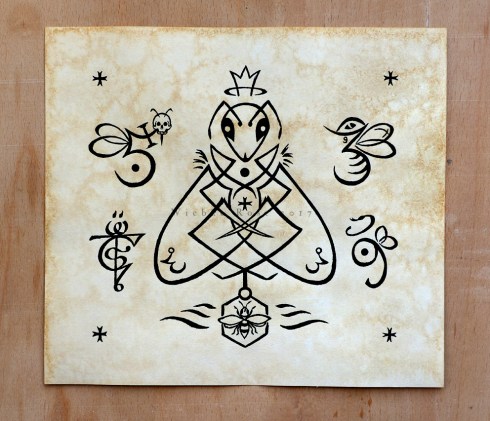
“Regina Bombina”, ink, 2017
Totemic artwork, first show-cased at Circle1 gallery in Berlin last year. It is my homage to the great mother and queen, as she has been depicted in the form of crowned bees or half human half bee shaped spirits in ancient civilizations. She is surrounded by her servants, little bee demons.
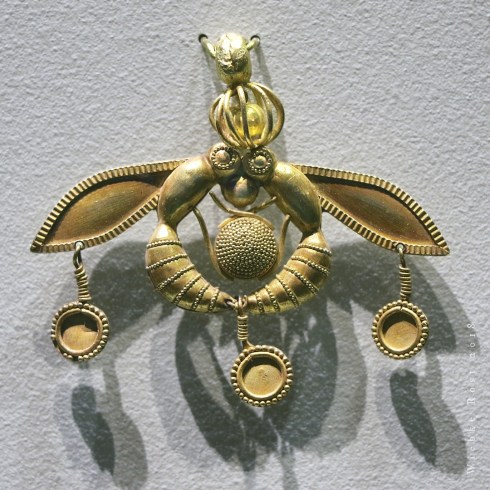
Golden Bee Pendant, Malia, Crete, 1800-1700 BC
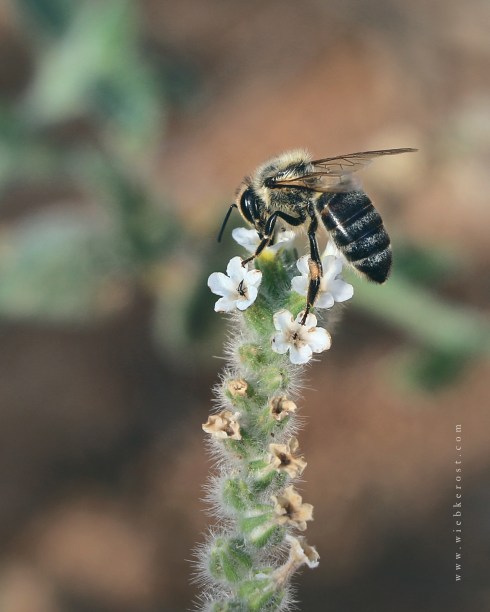
Honey Bee, Malia, Crete, 2018

“The Sacred Bee”, Hilda M. Ransom, Dover Press, 2004

“The Sacred Bee”, Hilda M. Ransom, Dover Press, 2004
After seeing the golden bee pendant from Malia in person, I started a new read: “The sacred Bee” by Hilda M. Ransom. It discusses the mythology and folklore of bees in ancient civilizations across the world and also features a chapter on the roll bees played in ancient Cretan life and worship practice. I am hence delving deeper into the concept behind my “Regina Bombina” and “Flower Devils“.
New Postcards: Flower Devils, Plants and Planets and more
6 Oct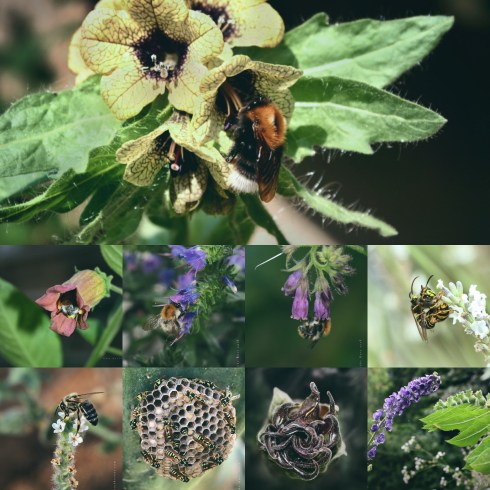
“Flower Devils”
In German folklore, witches and even the devil himself were believed to take on the shape of bumblebees. A bumblebee-wax candle was lit in church, if a witch was burnt at the stake. Evil people were cursed with having to return as a bumblebee after death. The sub-earthen drone sound of a bumblebee signaled the presence of the dead. Instead of consecrated wavers, bumblebees were allegedly served at black masses. Bumblebees were also superstitiously feared as carriers of sickness and ritually buried to drive out plague. On the other hand, a dead bumblebee worn in the pocket, was believed to ensure the purse would always be filled with money. And he, who managed to secretly steal the bumblebee’s honey, was destined to find a huge treasure. Hence bumblebees were both viewed as good and bad omens.
Special to me is the photo of a bee among the ruins of an old Minoan Palace in the city of Malia (Crete). In the location was found a massive golden bee amulet, depicting two crowned bees holding a honey drop. Bees and other pollinators played important rolls both in the religion of ancient civilizations as well as folklore.
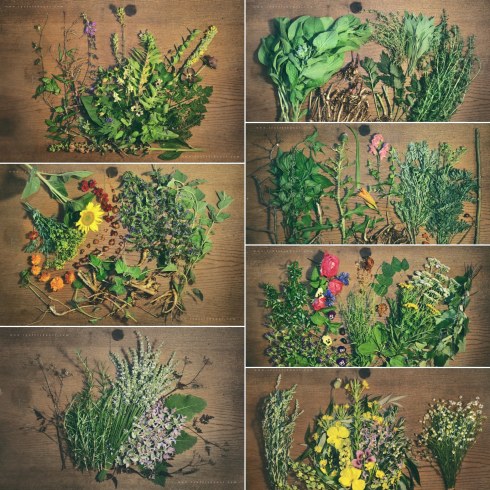
“Plants and Planets”
Also new: postcards with my occult/nature inspired “Plants and Planets“ series from 2018! Available in two formats.
In the past botanists such as Nicholas Culpeper associated plants with the planets, fixed stars and zodiac signs. The attributions were based on an intense study of a plant’s features, which included treats such as a thorny or prickly appearance, the scent emitted by the flowers or the entire plant, the plant’s life cycle, colors, metals contained in a plant, medicinal and other uses and of course plenty of folklore. The planetary lore of plants is preserved and continues to evolve in the books of authors such as Stephen Skinner, Paul Huson, Scott Cunningham, Harold Roth and so on.
I find it inspiring to continue this tradition and to explore its own inner logic. Hence I created these planet themed still life photographs of herbs, that I gathered from our garden and surroundings, many of which are also part of my seed boxes. With this series I yet delve deeper into the language of plants and the symbolism and magical properties attributed to them.
The postcards have round edges and the sizes comply with common post standards. The motifs are printed on “silk” photo paper and laminated on durable white cardboard, which is pre-printed on the back. For ordering please head over to the Teufelskunst webshop.
Düsseldorf Skies
24 Aug-
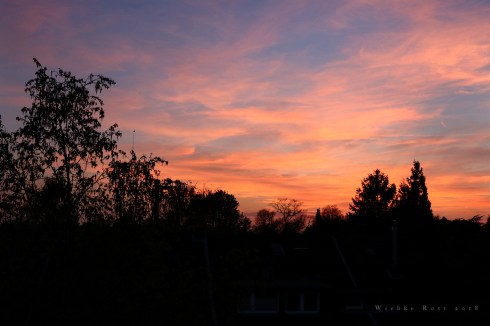
- Abenddämmerung Düsseldorf
-
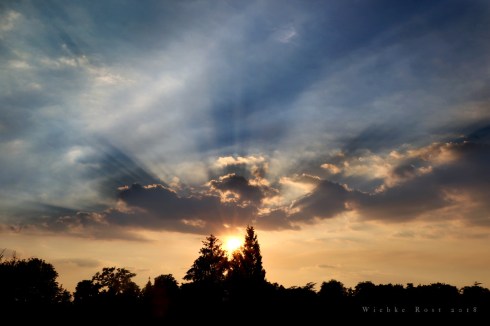
- Sonnenuntergang Düsseldorf
-
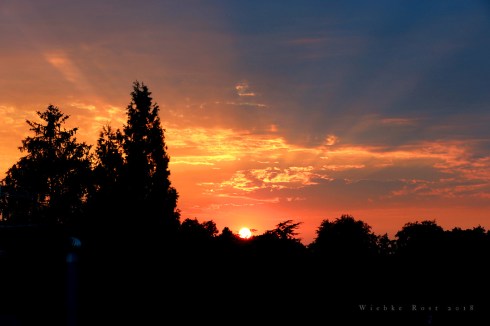
- Sonnenuntergang Düsseldorf
-
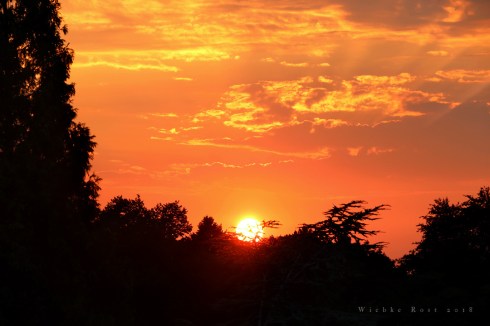
- Sonnenuntergang Düsseldorf
-
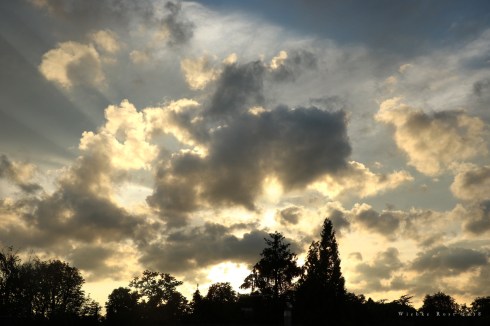
- Sturmwolken Düsseldorf
-

- Sturmwolken Düsseldorf
-

- Sturmwolken Düsseldorf
-

- Sturmwolken Düsseldorf
-

- Wolkenformationen
-
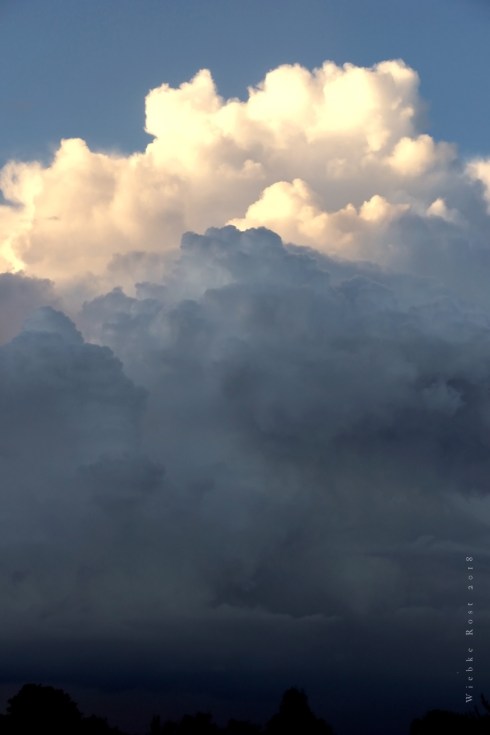
- Wolkenformationen
-
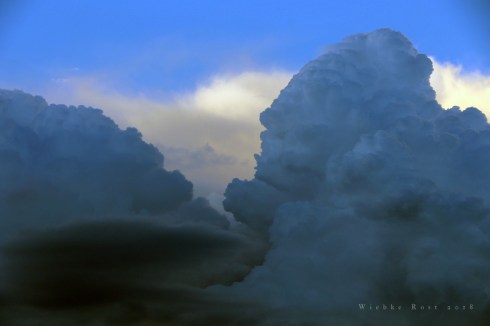
- Wolkenformationen
Sunsets and Cloud Scapes over Düsseldorf, photographed in April, July and August 2018
 Wiebke Rost