New Year’s 2015

5 Jan

IMG_0129+

I spent my New Year’s in a church and I liked it.

I’m from Dresden. That’s the town famous for its late baroque pomp and for being bombed to ashes at the very end of WWII. It’s also known as “Tal der Ahnungslosen” due to the geographical location, which made it difficult to receive tv from Western Germany during GDR times. It is also known for people protesting peacefully on the streets, which eventually lead to the events that brought down the Wall. In 1989 the motto “Wir sind das Volk” was used because people yearned for more freedom, equality and unity. It was motivated by positive ideals and hope. 25 years later people are protesting again on Dresden’s streets. They are using the same motto, but the motivation is a different one. People are now driven by fear, frustration and hatred. Interviews with single participants of these “silent protest marches” show how diverse the motifs are. Social injustice ranks high, amongst fears of being outnumbered, underprivileged. People are troubled with various problems. The actual motto of these demonstrations occurs almost secondary to the participants, but it is this motto, which is now being perceived world-wide: “against the Islamification of the Christian Western civilisation”. The main motif, which is carried forth on banners and in news headlines is xenophobia. The individual motivations of the people do not make the headlines.

In other countries people protest for freedom, justice and a better education. The message is clear and unequivocal.

In Germany people are apparently unable to formulate their actual concerns or they feel not taken serious if they do. Instead people now march under the banner of “PEGIDA”. It is a motto that the biggest number of the participants of these protests does not support. Yet they decide to follow it for whatever reason. The message on that banner is clear and there is no way of trying to relativize it. This is tragic and we have seen before where such passive followership can lead.

I truly hope that most of the people participating in these protest will come to senses and choose the right language for their goals. Preserving our values is indeed something to stand up for. But it is even better done by contributing one’s part and being a good example, whether you’re an artist, architect, dental technician, engineer, gardener, hair stylist, waiter/waitress, university professor or unemployed. It starts with yourself and good manners. It continues with being nice to others.

So what did I do this New Year’s? I was in fact still sick with tonsillitis and had been on antibiotics since the weekend. I felt weak and in a situation where help, love and comfort are needed. I’m extremely grateful to have two loving parents and friends that care for me in such situations. I’m grateful there was a doctor on Saturday morning to have checked me and prescribed the necessary medication. I’m grateful also, to have spirits to call upon and pray to in such a situation.

I do in fcat believe in god and a higher cause. I am interested in the essence behind the religious forms of all sorts of traditions, which are a continuous inspiration in my art. I take from all places and I pick out the best for myself. I feel this is the natural way to do in life.

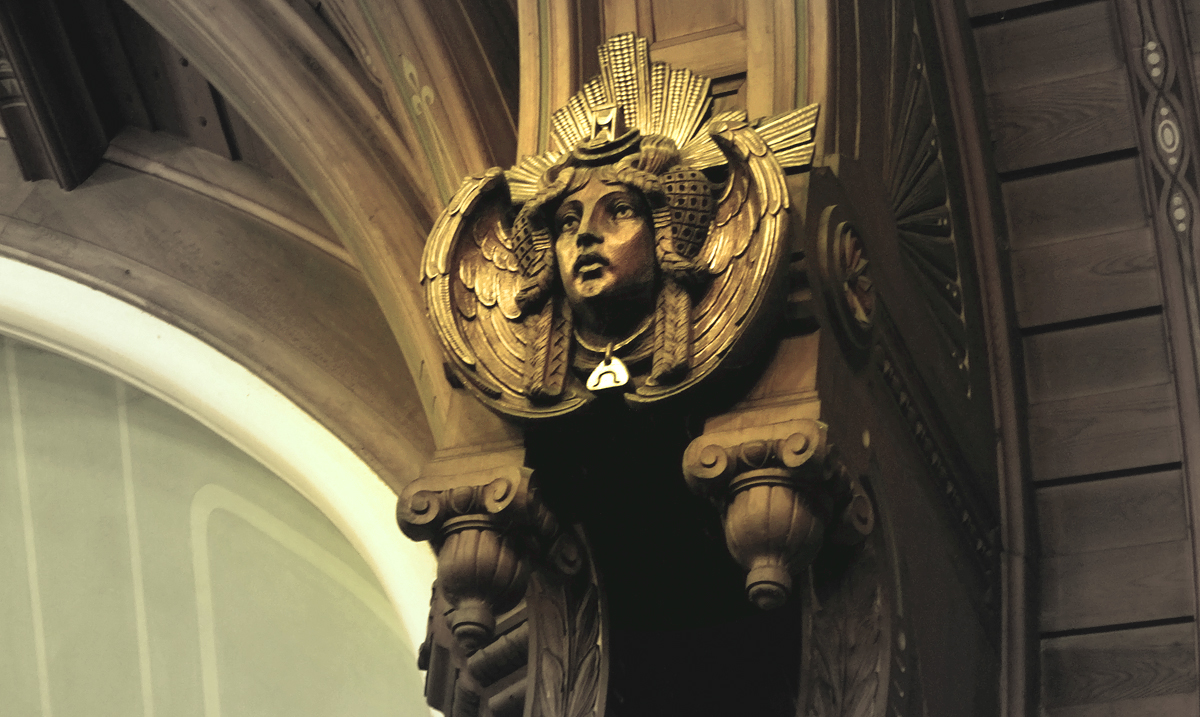
We (that is my parents and me) spent this New Year’s in a small church in Dresden Plauen. This in itself felt like a little miracle and it would have sounded like an impossibility if you would have told me a few weeks ago. But this is another story and here we were. It’s been my dream to see this church from the inside for years. And little could I know of how beautiful its art nouveau interior really was…

The pastor made a very short speech, welcoming the guests, introducing the organist, Andreas Jud, a young, award-winning musician from Switzerland, and then wished us all a Happy New Year. The rest of the evening was music. No talk, no politics, no agendas. Just the organ in full blast, the organist giving his very best. And every attendant was left to his own thoughts and contemplations.

With this in mind I wish all my followers and friends all the best for 2015.

(more photos of the church to follow in my next post)

Tree Lights

1 Jan

Last photos for 2014, first post for 2015 –  I’m still sick but went for a short walk on New Year’s Eve and took the camera with me. I’ve always enjoyed experimenting with long exposure times and flashlight at night. Especially when not feeling well, this always had an uplifting effect on me.

See also: https://wiebkerost.com/2014/01/18/natures-church/

Thanks so much to my followers and supporters!

All the best for 2015!

Harvest Circles and other Compositions

30 Dec
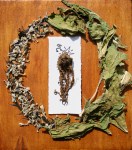
Fungi collection, 2013

Fungi collection, 2013

Find updated the site’s Art section, to which has been added amongst others a new page for “assemblage” works, which includes old and new pieces.

Assemblage is an artistic process. In the visual arts, it consists of making three-dimensional or two-dimensional artistic compositions by putting together found objects.

Usually this refers to fixed creations constructed from various elements, which may or may not be movable. I am expanding the term as I also group temporarily assembled objects into that category. You find there for example my “Harvest Circle” series and various other loose compositions, which are put together only for the moment of the photo and later re-used for other purposes. E.g. the dried herbs, fungi and flowers may be utilized by Occvlta jewellery in the creation of unique pendants and artefacts. Yet these temporary works have a point and meaning of their own and may talk to the viewer in different ways. Technically these could be considered still lifes, however I feel the elements are literally assembled, and the process and style of the compositions are closer to assemblage than classical still life.

Central to the work are the dried (and dead) parts of plants, from seed to root, from flower to fruit and everything in between. Usually the material is derived from plants I have grown and harvested by myself. Hence another working title for these compositions is “Dead & Arranged”. Below are some more examples.

In the future I consider doing fixed assemblages in the manner pictured, however I am still researching techniques and materials.

Gallery

Winter

27 Dec

Sunny December Morning

15 Dec

I was told this was going to be a beautiful day. It was so nice to be up early, enjoying a cup of coffee and seeing the flowers and shrubs in the front yard lit up and warmed by the sun.

Gallery

Fall

22 Nov

Christmas Rose

14 Nov

“Then he who is about to dig out the plant turns to the East and prays that it may be accounted lawful for him to do this and that the gods may grant him permission.” – Pliny the Elder

Folklore: East is where the sun rises and considered to be the place in heaven where the good spirits dwell. According to Christian tradition the dead are buried facing East, which is the direction from which Jesus is believed to arrive on the day of the resurrection in order to take them with him into the kingdom of heaven. But already before the Christian custom pagans would bury their dead so they would face the rising sun.

“One part hellebore with as much artemisia placed beneath a diamond gives animosity and audacity, guards the members [of the wearer] and makes victorious over what you wish.” – Hermes Trismegistus, 15 Fixed Stars 15 Herbs 15 Stones and 15 Figures

According to Hermes Trismegistus black hellebore is attributed to the fixed star Algol, together with the diamond. Agrippa connects the plant further to Mars and places it also under the rule of Saturn:

“Hellebore is dedicated to Mars and the Head of Algol.” – Agrippa

In ritual, hellebore may be burnt for consecrating Saturnian talismans and conjuring spirits of Mars. Christwurzel is also a key herb in Faustian rites of exorcism and coercion, along with garlic and sulfur:

“Carry with you Aaronis and also Hellebore, so that he [the demon] cannot delve into you or possess you.” – Dr. Faust, Magia Naturalis et Innaturalis

The name Christmas Rose comes from its auspicious time of flower or from the Christian legend that it sprouted from a young girl’s tears fallen on the snow, when she was sad that she had no present for the Christ child in Bethlehem. Another legend tells of the goddess Freya, who rescued an abandoned child during a deadly cold winter night by transforming it into a hellebore flower. Hellebore is also a symbol of innocence. It was considered holy and believed to ward off evil spirits, help heal the black death and safe pigs from swine flu if a helleborus flower was placed on the animal’s ears.

The name hellebore is composed of the Greek word ellein = to injure and bora = food, whilst the Latin adjective niger = black, may refer to the color of the plant’s root, which is almost black when dried. The German name Nieswurz refers to its use in sneezing powders. In medieval medicine it was a cure against demonic possession. The plant has a long tradition in healing madness and epilepsy (also called the ‘divine disease’ if a person was possessed by a demon): Ovid writes in his Metamorphoses of the three daughters of king of Argos, who had been driven mad by Dionysos and were screaming and running naked all across town, being cured by the healer Melampus of Pylos with a drink of hellebore solved in milk. Hence the herb was also known by the name Melampodium. Alexander the Great on the other hand is said to have died of an overdose of medication containing hellebore. During the Siege of Kirrha 585 BC, the Greek were said to have poisoned the city’s water supply with hellebore and waited until the enemy was too weak to be able to defend it any longer due to the diarrhea caused by the plant’s poison.

Pliny the Elder mentions the existence of an opposite to the Black Hellebore (Helleborus niger), with the ‘White Hellebore’ or ‘False Helleborin’ (the plant referred to is probably Veratrum album).

Gallery

The Electorial Chapel

13 Nov
Gallery

More of Meißen: The Dome

13 Nov

More of Meißen: The Cloister

13 Nov

Cloister, belonging to the Dome of Meißen; there hardly gets any sunlight into the yard, which is covered in ivy and fern. Strange figurines carved into sandstone watch from the side. It’s a beautiful mysterious place.