Archive | nature photography RSS feed for this section

Flower Devils Photobook

15 May

I recently submitted an application for a photo book voucher from Saal Digital and received it promptly. 👍 The voucher code lasts for 14 days.

For compiling the book, I tested the free design software provided by Saal Digital. In the first step, I chose the book format and style: a simple matte look and 28 by 28 cm square format with 28 pages. Further pages can be added or pages deleted later (it became 34 pages). The software allows to switch between auto-layout and manual layout. The photos are added by simple drag and drop and the program arranges them in a smart way. In addition, one can chose between different layout templates, including text. ‎The only glitch I encountered was, that the text formatting kept jumping back to default value when changing the images. 👎 Else I found the software handy and easy to employ. 👍 I was especially curious how images and text spread across two pages would turn out.

Altogether I spent a whole day, selecting, editing and arranging the photos. It was a fun work and I found myself browsing archives spanning over nearly a decade.

I submitted my order digitally on the 9th of May. The voucher code was to be entered at the end of the order process. I ended up with a total of 11,90 Euro instead of 51,90 Euro (with shipping included). The confirmation e-mail told me to expect my book to be delivered on the 15th of May, but I already received it on Monday, 13th of May. 👍

I am very pleased with the overall quality. The matte paper is thick and not translucent at all. 👍 The biggest benefit to me are no fingerprints, as well as a natural look and feel, 👍 even though the colorful images may also look nice on glossy paper. The photos look vivid and show great detail in print. 👍 Any deviations in color are owed to my mean Photoshop skills (they show and I will correct them next time). Thanks to the layflat binding, the large images flow across two pages  seamlessly (without any offset). 👍 I am further pleased with the crispness of the lines on my black and white illustration. 👍 Finally, I allowed for a tiny QR code to be added at the backside. It is really unobtrusive, but can also be left out (for a 5 Euro extra fee).
I tested the basic photo book without any extras. Next time I may opt for a black background on the cover and a smaller font. It may also be interesting to try out options with leather or linen weave, though 20 Euro extra on top of the 40 Euro base price are a bit of an obstacle. ‎👎

👍👍👍👍👍👍👍👍 8 thumbs up for the overall service, quality and free software

👎👎 2 thumbs down for the text formatting glitch in the software and the comparably high prices on professional photo books

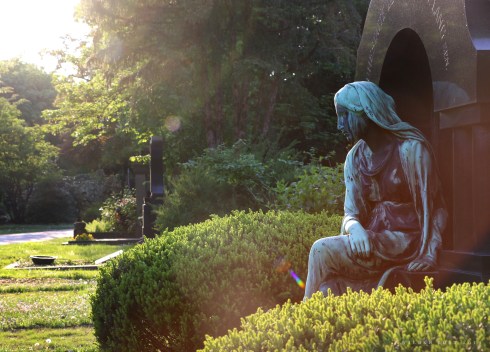
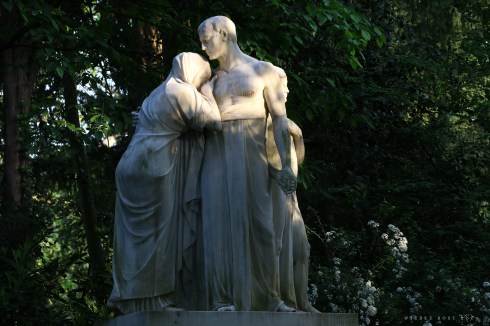
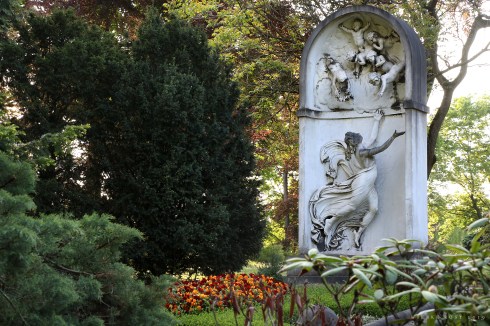
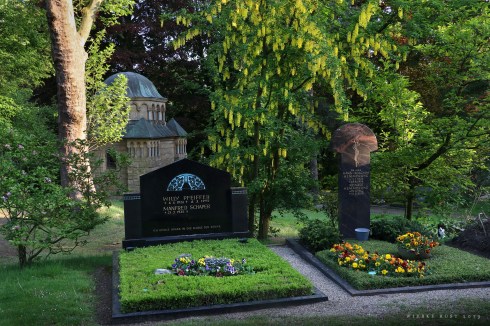
Nordfriedhof Düsseldorf

10 May

May 7th, 2019, Nordfriedhof Düsseldorf

Early Bird

5 Apr

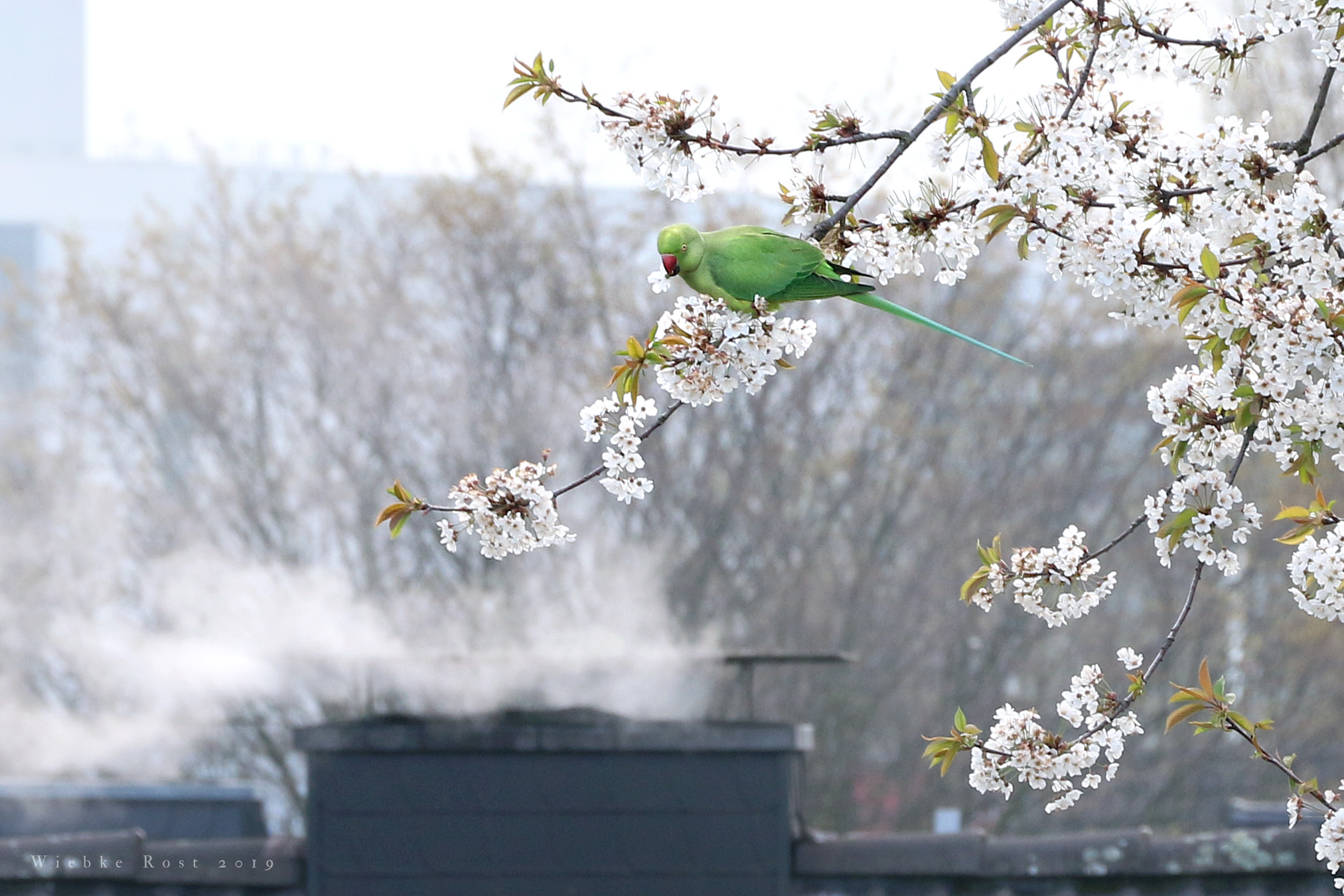
This ring-necked parakeet is enjoying an early morning lunch by eating the flowers of the cherry tree in our yard. Ring-necked parakeets are spreading in German cities, especially in North-Rhine Westphalia and are getting into conflict with humans. E.g. Cologne began in 2018 to actively expel the birds from its city center. Meanwhile ornithologists suggest beneficial effects of the parakeets, since their breeding burrows are being reused by other birds, e.g. stock doves, which are listed as threatened. The parakeets breed earlier than our native birds. During autumn there about 3000 parakeets, crows and jackdaws gathering at Düsseldorf’s ‘Kö’.

Kamelienblüte Schloss Pillnitz, Frühlingsanfang 2019

22 Mar

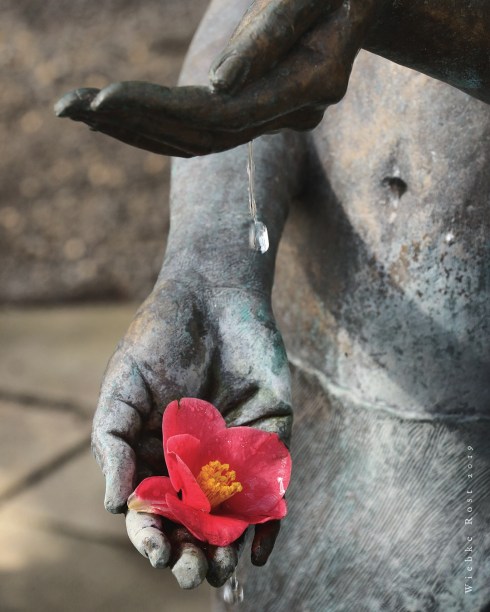
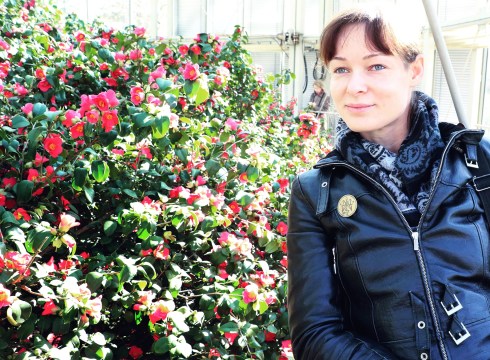
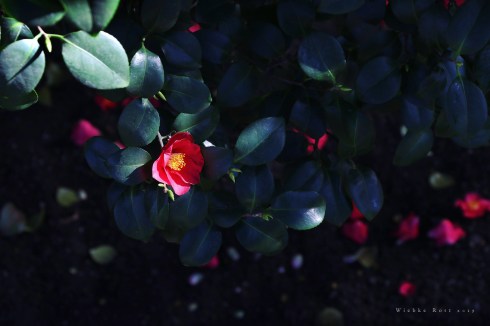
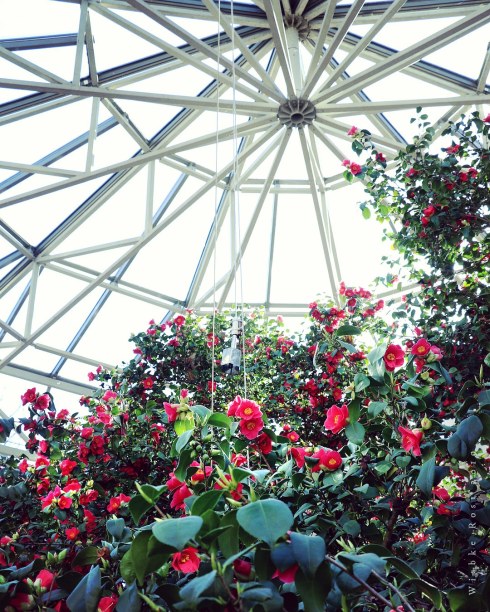
The camellia in Pillnitz is around 230 years old, almost 9 m high and 11 m in diameter. From February to April it is covered in carmine red flowers. During the cold season, the tree, which was planted in 1801 by court gardener Terscheck, is protected by a large glass house with stairs. During this time visitors can enter and view the tree from two levels.

In the mid 19th century Dresden became a European hot spot for the culture and breeding of camellias, and exported them to Russia as well as Italy and Spain. The camellia was viewed as a status symbol among European aristocrats, and Russians in particular, had a high demand for camellia flowers, which were exported in thousands to St. Petersburg and Moscow.

With growing popularity among Westerners, and contrary to its Far Eastern symbolism, the meaning of the flower changed. Thanks to popular literature, most prominently La dame aux camélias by Alexandre Dumas from 1848, as well as real life personae, such as the “Wiener Cameliendame”, a dancer named Fanny Elßler, the camellia became erotizised!

On the other hand the longevity of the flowers, and particularly white camellia flowers, became associated with death and mourning and were woven into funeral wreaths.

The seeds of all known (about 200) camellia seeds yield a valuable oil, which smoothes the hair and juvenates the skin. The oil is rich in linolenic acid, and is also used in cooking and reduces cholesterine. Samurai rubbed camellia oil unto their sword blades to protect them from rust. The oil is also used as a natural surface finish for wood, as lube in watches and precision engineering and more.

Camellia wood is hard and durable and was used in the manufacture of weapons, different tools as well as kokeshi dolls. Up to the Edo period, a camellia rod was used in Buddhist ceremony to punish and drive out malign spirits. The wood also yielded a spark-free and, hence sought after charcoal.

Camellias are highly resistant against diseases and may contain different antibacterial and fungicidal agents.

Besides, the first Westerner to portrait a camellia flower was likely a Saxon gardener by the name George Meister. His book “Der Orientalisch-Indianische Kunst- und Lust-Gärtner” was published in 1692 in Dresden. In it he describes both the camellia as well as its crop plant, Camellia sinensis var. sinensis – the tea shrub!

Further Reading:

Geschichte & Verwendung von Kamelien


https://de.wikipedia.org/wiki/Pillnitzer_Kamelie
https://www.schlosspillnitz.de/de/schloss-park-pillnitz/kamelie/

Nordfriedhof, January 2019

23 Jan

Nordfriedhof Düsseldorf, January 11th, 2019

Fall 2018

5 Nov

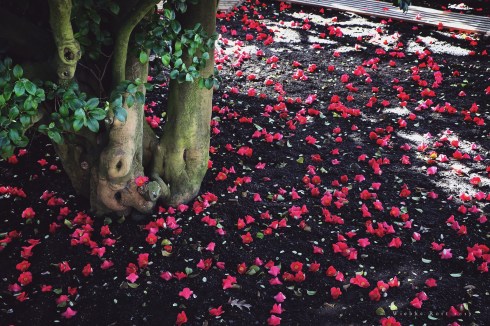
Fall is here, death is here, but the flowers keep on flowering

Regina Bombina, Golden Bee Pendant, The Sacred Bee

14 Oct

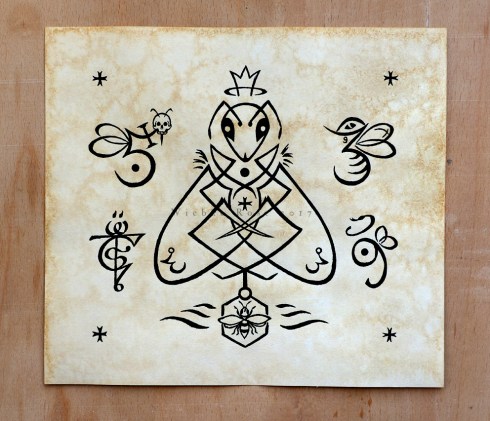
“Regina Bombina”, ink, 2017

Totemic artwork, first show-cased at Circle1 gallery in Berlin last year. It is my homage to the great mother and queen, as she has been depicted in the form of crowned bees or half human half bee shaped spirits in ancient civilizations. She is surrounded by her servants, little bee demons.

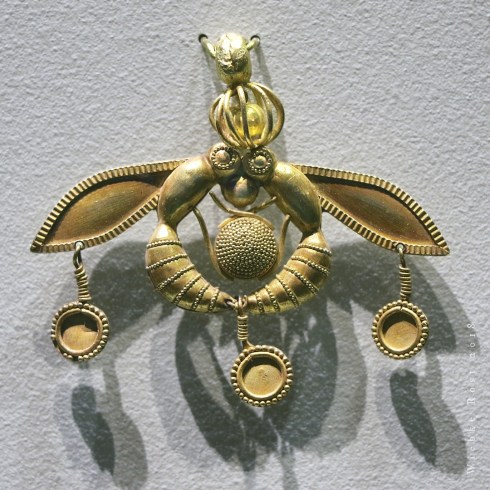
Golden Bee Pendant, Malia, Crete, 1800-1700 BC

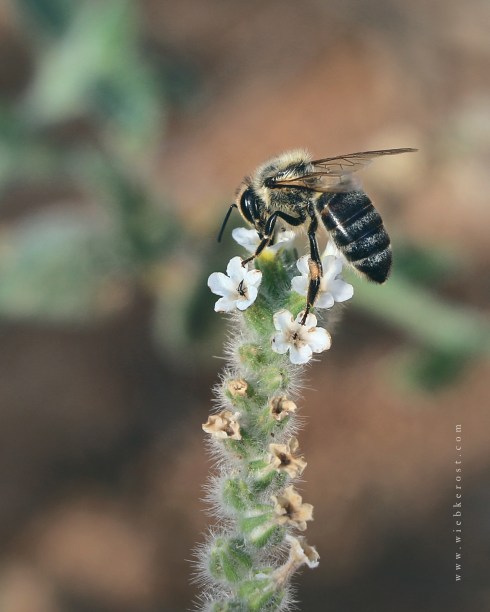
Honey Bee, Malia, Crete, 2018

“The Sacred Bee”, Hilda M. Ransom, Dover Press, 2004

“The Sacred Bee”, Hilda M. Ransom, Dover Press, 2004

After seeing the golden bee pendant from Malia in person, I started a new read: “The sacred Bee” by Hilda M. Ransom. It discusses the mythology and folklore of bees in ancient civilizations across the world and also features a chapter on the roll bees played in ancient Cretan life and worship practice. I am hence delving deeper into the concept behind my “Regina Bombina” and “Flower Devils“.

New Postcards: Flower Devils, Plants and Planets and more

6 Oct

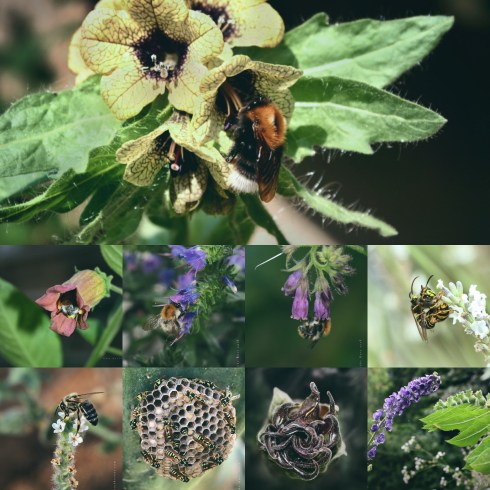
“Flower Devils”

In German folklore, witches and even the devil himself were believed to take on the shape of bumblebees. A bumblebee-wax candle was lit in church, if a witch was burnt at the stake. Evil people were cursed with having to return as a bumblebee after death. The sub-earthen drone sound of a bumblebee signaled the presence of the dead. Instead of consecrated wavers, bumblebees were allegedly served at black masses. Bumblebees were also superstitiously feared as carriers of sickness and ritually buried to drive out plague. On the other hand, a dead bumblebee worn in the pocket, was believed to ensure the purse would always be filled with money. And he, who managed to secretly steal the bumblebee’s honey, was destined to find a huge treasure. Hence bumblebees were both viewed as good and bad omens.

Special to me is the photo of a bee among the ruins of an old Minoan Palace in the city of Malia (Crete). In the location was found a massive golden bee amulet, depicting two crowned bees holding a honey drop. Bees and other pollinators played important rolls both in the religion of ancient civilizations as well as folklore.

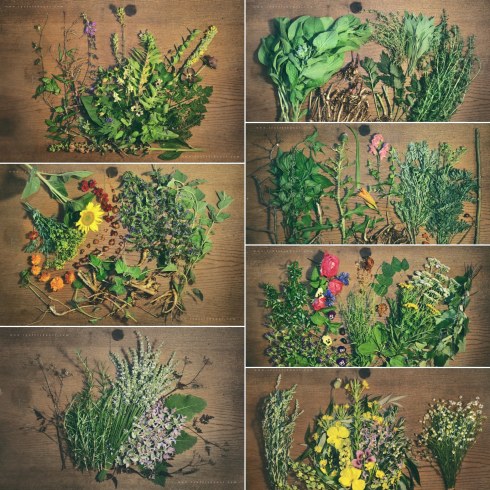
“Plants and Planets”

Also new: postcards with my occult/nature inspired “Plants and Planets“ series from 2018! Available in two formats.

In the past botanists such as Nicholas Culpeper associated plants with the planets, fixed stars and zodiac signs. The attributions were based on an intense study of a plant’s features, which included treats such as a thorny or prickly appearance, the scent emitted by the flowers or the entire plant, the plant’s life cycle, colors, metals contained in a plant, medicinal and other uses and of course plenty of folklore. The planetary lore of plants is preserved and continues to evolve in the books of authors such as Stephen Skinner, Paul Huson, Scott Cunningham, Harold Roth and so on.

I find it inspiring to continue this tradition and to explore its own inner logic. Hence I created these planet themed still life photographs of herbs, that I gathered from our garden and surroundings, many of which are also part of my seed boxes. With this series I yet delve deeper into the language of plants and the symbolism and magical properties attributed to them.

The postcards have round edges and the sizes comply with common post standards. The motifs are printed on “silk” photo paper and laminated on durable white cardboard, which is pre-printed on the back. For ordering please head over to the Teufelskunst webshop.

Düsseldorf Skies

24 Aug

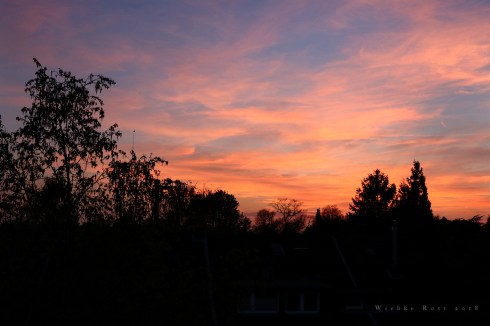
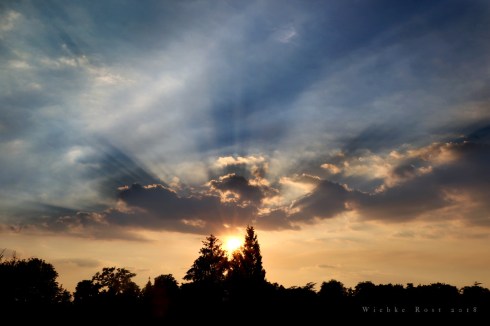
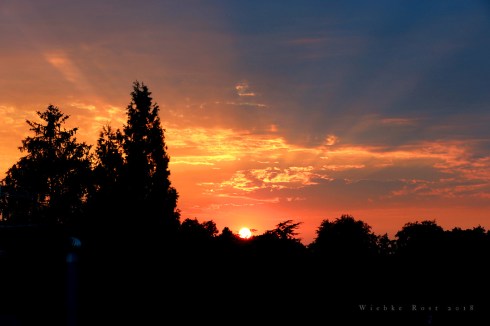
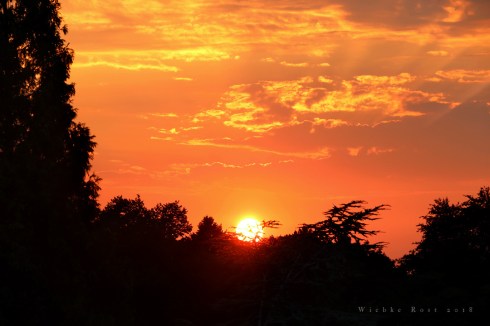
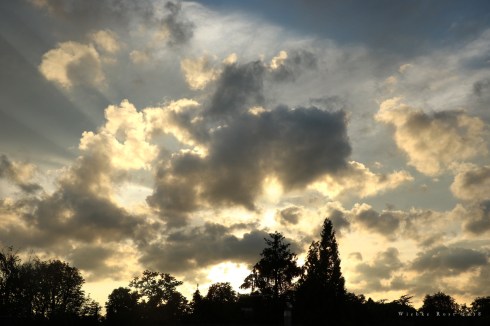
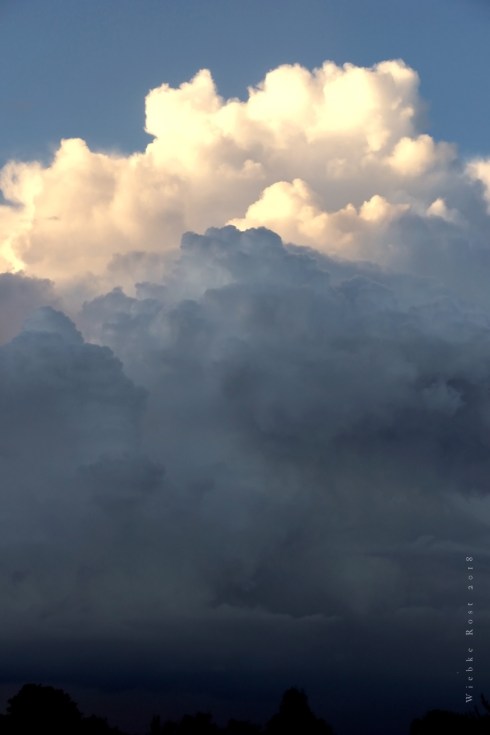
Sunsets and Cloud Scapes over Düsseldorf, photographed in April, July and August 2018

Japanischer Garten / Nordpark, Düsseldorf

3 May

3 weeks ago I moved to Düsseldorf. One of the first things we explored was the Nordpark and Japanischer Garten, while the cherry trees were still in bloom.